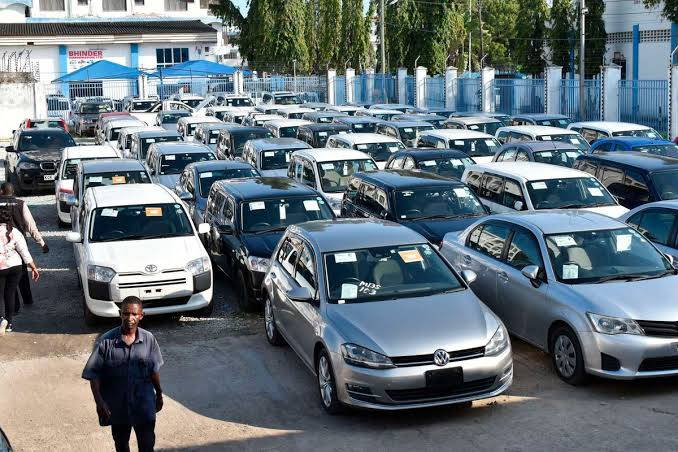
Kenya’s import taxes keep piling up for vehicle importers in 2026, even as EV incentives get rolled back. Here’s what’s changed and what it means for buyers.
Taxes Remain a Major Issue for Importers
If you’ve priced a used import lately, you already know: bringing a car into Kenya in 2026 costs more than it ever has, and the tax bill is the biggest reason why. Between the standard duty stack that’s been applied for years and a fresh round of changes tucked into the Finance Act 2026, importers — from small clearing agents to big dealership operations — are dealing with a tighter, pricier, and more paperwork-heavy environment than at any point in recent memory.
The Basic Tax Stack Hasn’t Gotten Any Lighter
Every vehicle landing at Mombasa still has to clear the same wall of charges before it touches Kenyan roads. Passenger cars attract a 35% import duty under the East African Community Common External Tariff, plus excise duty that varies by engine size and fuel type — petrol or hybrid engines up to 1500cc are taxed at 20%, 1501–3000cc at 25%, and anything above 3000cc at 35%, while diesel engines above 2500cc also hit 35%. On top of that, VAT is applied at 16%, and importers also pay an Import Declaration Fee and a Railway Development Levy. Stack it all together, and the combined tax burden can reach 70–100% of a vehicle’s value — effectively doubling what you’d pay for the car alone.
Add to that the now-familiar age rule: since January 1, 2026, only right-hand-drive vehicles first registered in 2019 or later can clear customs under KEBS standard KS 1515:2000. That’s already pushed the floor price for a decent used import — think a clean Toyota Vitz — from around Ksh 350,000 to somewhere between Ksh 500,000 and Ksh 700,000. Taxes on top of that stricter baseline is where the real pain is showing up.
New Compliance Rules Are Landing on Importers Too
It’s not just rates — it’s paperwork. Under the Finance Act 2026, most provisions take effect from 1 July 2026, but a new mandatory export declaration regime for all importers kicks in from 1 September 2026. Importers will need to obtain and retain export declarations from the country of export for every imported item, and where they can’t produce one, KRA can reject the customs declaration, reassess taxes, and impose penalties. The Act also gives KRA new power to recover unpaid statutory fees and levies as if they were tax debts. For car importers already juggling KEBS inspections and CRSP valuations, that’s another compliance layer to get wrong.
The EV U-Turn Nobody Saw Coming
Here’s the part that’s really got the sector talking. The Finance Bill 2026 proposed extending the standard 16% VAT to imported electric vehicles, lithium-ion batteries, and electric bicycles — reversing tax breaks that had been central to the EV sector’s expansion. That’s a sharp reversal from a government that launched its National Electric Mobility Policy at KICC in February 2026, explicitly naming the earlier zero-rating as a cornerstone incentive. Treasury is under pressure from persistent fiscal deficits estimated at 6.4% of GDP, and is reportedly in IMF talks over a projected KES 1.14 trillion budget deficit for 2026/2027 — which explains the appetite to claw back revenue anywhere it can, EVs included.
For everyday boda boda riders, the economics still favour electric — running on battery power costs roughly Ksh 200–290 a day, compared with Ksh 500–700 for petrol — so demand isn’t going away. But importers of private EVs, batteries, and assembly components are watching the VAT question closely, since it directly affects landed cost.
What This Means If You’re Buying or Importing
If you’re in the market, the smart move is to budget with the full tax stack in mind, not just the sticker price from the auction listing. For Kenyan news, reviews, and driving tips that keep pace with these changes, it’s worth checking automag.co.ke, which remains a solid source for tracking policy shifts like this one as they land. If you’d rather skip the import headache altogether, auto24.co.ke is a good place to browse locally available second-hand stock instead. For a second opinion on the numbers, autoskenya.com covers the same beat with useful reader tools. And if the EV tax uncertainty has you leaning toward electric anyway, EV24.africa is worth a look for import options while the incentive picture sorts itself out.
Bottom line: the taxes aren’t new, but the pressure is compounding — stricter age limits, a heavier compliance regime from September, and a possible EV rollback all landing in the same year. Importers who plan around the full picture, not just headline duty rates, will come out ahead.