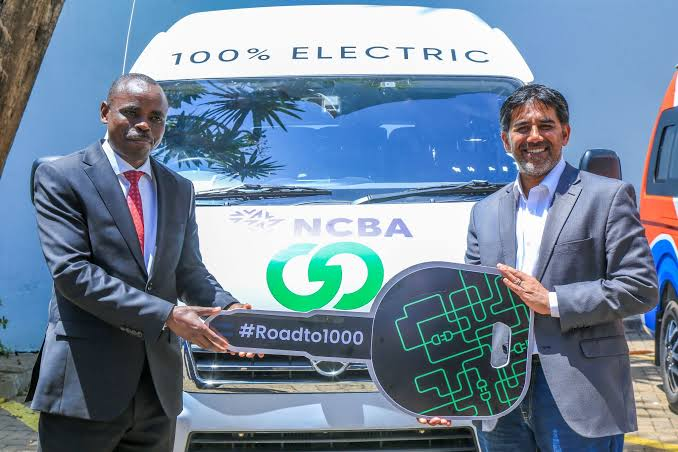
NCBA Bank partners with local distributors to offer attractive EV financing deals and new car asset-financing options for smart Kenyan drivers in 2026.
EV Financing Deals: NCBA Bank and Local Distributors Continue Pushing Attractive Electric Vehicle and New Car Asset-Financing Deals
NCBA Bank, in partnership with prominent local distributors, has officially launched a highly aggressive asset-financing drive aimed at making electric vehicles (EVs) and brand-new cars far more accessible to the Kenyan public. Announced in September 2026, this major financial push addresses the growing credit demands of motorists trying to navigate a rapidly changing macroeconomic and regulatory landscape. By structuring specialized credit facilities that lower the traditional entry barriers for clean energy transitions, these strategic EV financing deals represent a massive structural shift in how local corporate fleets and everyday commuters are funding their automotive upgrades.
The timing of this financing campaign is no coincidence. Motorists are feeling the pinch of an evolving car market, making structural corporate backing an absolute necessity for anyone looking to secure reliable wheels.
Why New Car Asset-Financing is Suddenly Crucial for Kenyans
For decades, the standard path to car ownership for a middle-class Kenyan was simple: browse a local car yard or import a clean 7-year-old Japanese hatchback. However, since January 1, 2026, Kenya has strictly enforced an 8-year age limit on used vehicle imports under the KEBS standard KS 1515:2000.
Only right-hand-drive vehicles first registered in 2019 or later are permitted to clear customs at the Mombasa Port. This regulatory tightening has completely erased the era of the ultra-cheap import. A reliable used option like a Toyota Vitz, which used to cost roughly Ksh 350,000, now commands a floor price closer to Ksh 500,000–700,000 for an entry-level unit.
TRADITIONAL IMPORT ENTRY POST-2026 AGE LIMIT REALITY
+—————————-+ +—————————-+
| Clean 7-Year Used Import | | Only 2019 or Newer Models |
| Budget: ~Ksh 350,000 | —-> | Floor Price: |
| (Pre-Jan 2026 Era) | | Ksh 500,000 – 700,000 |
+—————————-+ +—————————-+
With used car prices skyrocketing, the financial leap to a brand-new or locally assembled vehicle has narrowed significantly. Motorists are finding that checking certified pre-owned units on platforms like Auto24 Kenya or utilizing institutional asset backing makes far more fiscal sense than paying bloated premiums for aging imports.
The Economic Logic Behind NCBA’s EV Financing Deals
While the initial purchase cost of a private electric car remains higher than a traditional petrol vehicle, the day-to-day operational numbers tell a wildly different story. Kenya’s green transition has moved beyond high-level policy papers into real-world, localized economic value.
The real momentum is overwhelmingly visible in our vibrant logistics sector. Take a look at the daily operating math for our hardworking riders:
- Petrol Boda Boda: A rider typically burns roughly Ksh 500–700 per day on fuel alone.
- Electric Alternative: A rider utilizes localized battery-swapping or smart-charging networks for only Ksh 200–290 per day.
By eliminating nearly 60% of daily fuel overheads, electric adoption offers clear financial liberation. Recognising this massive margin, companies like Spiro Kenya (operating extensive battery-swapping stations) and MojaEV (with their local assembly initiatives) are heavily expanding operations. NCBA’s tailored financial credit products allow small business owners and fleet managers to lease or purchase these energy-efficient models with minimal upfront capital.
To follow detailed breakdowns, expert advice, and real user experiences with these emerging platforms, you can browse through the local resources on Autos Kenya.
Navigating Policy Tension: The 2026 Finance Bill
Despite the clear benefits, the road to a seamless green transition faces a few speed bumps. The rollout of the landmark National E-Mobility Policy in February 2026 introduced high-visibility green reflective number plates to fast-track administrative incentives for zero-emission vehicles.
However, there is live policy tension within government corridors. The proposed 2026 Finance Bill has sparked intense debate by threatening to roll back a few crucial EV tax incentives that were introduced less than a year earlier. This legal friction creates a temporary cloud of uncertainty around long-term pricing for commercial operators.
This fluid legal framework is precisely why institutional collaborations, such as the NCBA partnership, are vital. They insulate buyers from sudden market volatility by locking in structured, predictable payment paths. For motorists looking to navigate these legislative changes and secure reliable sustainable mobility imports without getting burned by unpredictable tax shifts, specialized portals like EV24.africa provide invaluable grounding.
How to Position Yourself for NCBA Asset Approval
If you are thinking of taking advantage of these modern financing avenues to secure a new car or fleet upgrade, preparation is everything. [INTERNAL LINK: Read our ultimate guide on managing car loans in Kenya here] to ensure your application sails through smoothly. Local financial institutions generally look for the following pillars:
- Clean Credit History: A flawless CRB report is mandatory.
- Consistent Bank Statements: Proof of steady cash flow over the last 6 to 12 months.
- Proportionate Deposit Power: While some premium corporate agreements offer up to 90% or 100% financing, a 10% to 20% down payment significantly lowers your monthly premium overheads.
For the latest updates on localized transport legislation, bank partnership announcements, or expert vehicle reviews across the country, keep it locked to your premier hub at AutoMag Kenya. Keep your eyes on the road, weigh your financial options wisely, and embrace the future of driving!