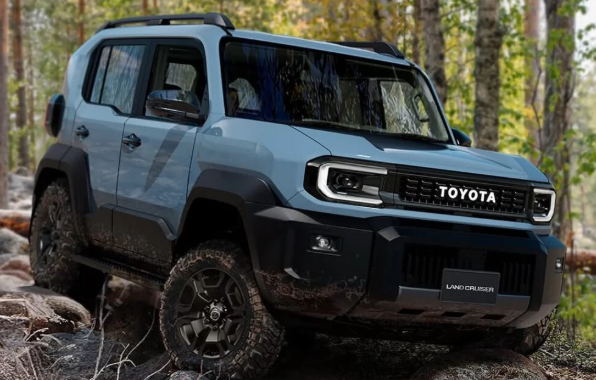
There is a reason the Toyota Land Cruiser name carries so much weight in Kenya. Decades of proven performance on some of the continent’s toughest terrain have turned it into something close to a motoring institution. But for many buyers, the full-size Land Cruiser 300 or even the 250 sits firmly out of reach — either in price, size, or both.
Enter the 2026 Toyota Land Cruiser FJ.
This is Toyota’s attempt to bring the Land Cruiser experience to a wider audience — a compact, more affordable 4×4 that carries the family’s legendary off-road credentials without the bulk or the budget demands of its larger siblings. For Kenyan buyers who need genuine capability on both city roads and rough upcountry terrain, it is a vehicle that deserves serious attention.
At AutoMag.co.ke, we cover the vehicles that matter most to Kenyan drivers, and the FJ is one of the most anticipated compact SUVs to arrive on our market in recent years. Here is everything you need to know.
What Makes the Land Cruiser FJ Different?
The FJ is the newest and most compact member of the Land Cruiser family. Unlike the larger 70, 250, and 300 Series, the FJ is designed to be nimble enough for daily urban use while still being capable enough to handle the kind of rough roads and light trails that many Kenyan drivers encounter regularly.
Think Nairobi suburbs and CBD during the week, then Naivasha, Nanyuki, or the Maasai Mara on weekends. The FJ is built for exactly that kind of dual life.
What it is not is a watered-down compromise. Toyota has kept the core Land Cruiser values intact — robust construction, part-time four-wheel drive, proper ground clearance, and the kind of long-term reliability the name is built on.
Engine and Transmission
The 2026 Toyota Land Cruiser FJ launches with a 2.7-litre petrol engine producing 163 hp and 246 Nm of torque. Power is sent through a 6-speed automatic transmission to a part-time 4WD system.
Toyota is expected to expand the lineup with diesel and hybrid variants in select markets — the diesel option is particularly relevant for Kenyan buyers who prioritise fuel economy on longer journeys, and a hybrid would be a significant development for urban efficiency.
Practical tip: If you are choosing between the petrol variant and a potential diesel version when it arrives, consider your primary use. The petrol engine is smooth and more than adequate for mixed driving, but on long highway routes like Nairobi to Mombasa, a diesel’s torque and fuel economy advantage becomes meaningful over time.
Trim Levels: Finding the Right Fit
The FJ is available in four main grades, catering to different budgets and use cases:
Land Cruiser FJ Base The entry point into the FJ family comes with alloy wheels, LED headlights, a basic infotainment system with smartphone connectivity, air conditioning, front and rear grab handles, and fabric upholstery. It is focused purely on rugged practicality — everything you need, nothing you do not.
Land Cruiser FJ Adventure This is the grade most buyers interested in actual off-roading will gravitate towards. It adds roof rails, an upgraded infotainment system, hill-start assist, electronic traction control, skid plates, and dedicated off-road driving modes. For Kenyan buyers who regularly tackle rough terrain, the skid plates alone justify the step up.
Land Cruiser FJ Premium Toyota’s comfort-oriented grade adds leather seating, ventilated front seats, a multi-terrain monitor system, larger alloy wheels, and a refined suspension tune for a smoother on-road feel. It bridges the gap between off-road credibility and daily comfort.
Land Cruiser FJ Limited Edition A special edition for enthusiasts who want their FJ fully kitted out from the factory. Unique paint options, custom roof racks, and modular bumpers are among the features that set this apart. It is less about the spec sheet and more about personal expression.
Interior: Built Tough, Designed Thoughtfully
Step inside the FJ and it is immediately clear this is a vehicle designed for use rather than show. The dashboard is clean and ergonomically laid out, with controls positioned for easy access even when you are bouncing along a corrugated dirt road.
The materials lean practical — hard-wearing plastics, water-resistant textiles on lower grades, and leather on the upper trims. Reinforced floor mats, well-positioned grab handles, and purposeful storage compartments throughout signal a vehicle designed by people who have thought about what drivers actually need in the field.
Front seat comfort is good, with generous legroom for taller occupants. The rear seats are comfortable for two adults on shorter journeys, though the compact wheelbase does mean rear legroom is tighter than in the larger Land Cruisers. Families with long-legged passengers may want to factor this in.
Storage highlights:
- Front: Spacious centre console, dual cupholders, a usable glove box, and sizeable door pockets
- Rear: Seatback compartments, door pockets, and a folding centre armrest with integrated storage
- All compartments are designed for durability and easy cleaning after muddy adventures
Boot Space and Cargo
The FJ’s boot is compact relative to the larger Land Cruiser variants, but practically sized for its class. It handles weekend luggage, camping gear, or a good supermarket run without complaint. The wide tailgate opening makes loading straightforward, and the spare wheel is mounted externally at the rear — optimised for off-road use and easy access.
Exterior Design: Unmistakably Land Cruiser
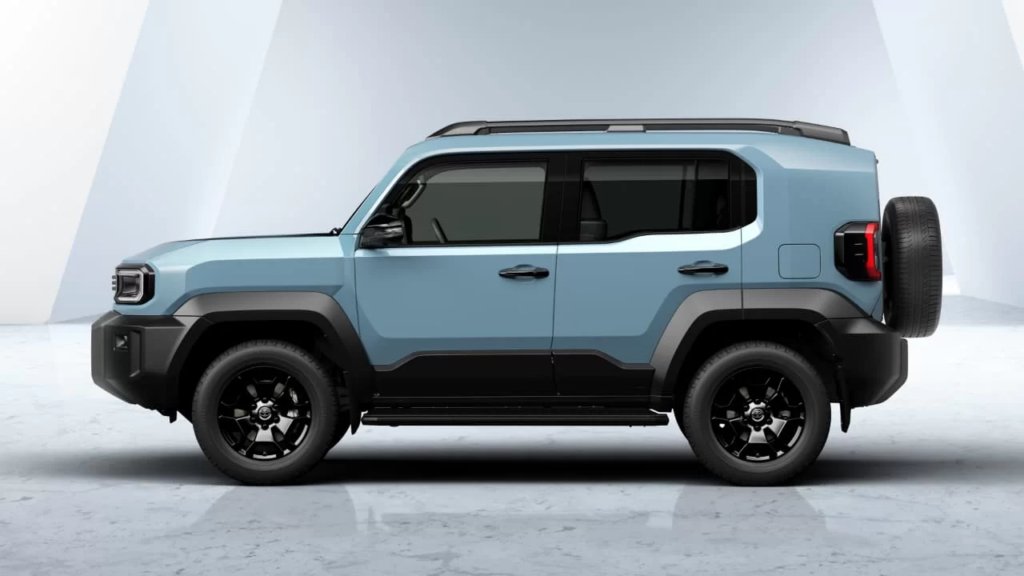
Nobody will mistake the FJ for anything other than a Land Cruiser. The boxy, upright stance is a deliberate nod to the family’s heritage, and it does more than just look purposeful — short front and rear overhangs give it better approach and departure angles for navigating steep trails and rocky crossings.
Up front, a bold grille flanked by LED headlights (optional on base, standard on higher trims) gives the FJ a strong visual presence. The modular front bumper design means owners can customise with additional off-road accessories without major modification.
In profile, the compact wheelbase is immediately apparent — and it is actually an asset for urban driving, where tight parking and narrow roads reward a smaller footprint. Roof rails and reinforced wheel arches add to the utilitarian character, while the alloy wheel options range from workmanlike to genuinely attractive depending on grade.
At the rear, wide LED tail lights, a practical tailgate, and an externally mounted spare wheel complete a look that is as functional as it is distinctive.
Safety Features
The FJ comes equipped with a solid safety package across all grades, with more advanced systems available on higher trims:
- Anti-lock Braking System (ABS) with Electronic Brake Distribution (EBD)
- Vehicle Stability Control (VSC) and Traction Control System (TCS)
- Hill-start Assist and Downhill Assist Control — both particularly valuable on steep Kenyan terrain
- Multiple airbags for driver and all passengers
- Rear parking sensors and reverse camera
- Multi-terrain monitor (available on higher grades)
- Blind spot monitor and lane departure alert (on premium grades)
For Kenyan drivers who regularly navigate mountain escarpments, river crossings, or poorly lit rural roads, the combination of downhill assist and multi-terrain monitoring adds a meaningful layer of confidence.
Fuel Consumption
The 2.7L petrol engine returns approximately 10 to 11 km per litre under mixed driving conditions — city and highway combined. This is a reasonable figure for a 4WD SUV, though drivers who predominantly use the 4WD system in low range will see consumption increase.
The rumoured diesel variant is expected to deliver around 12 to 13 km/l, and if a hybrid option becomes available, estimated figures of up to 15 km/l equivalent would make it significantly more economical for urban use.
The fuel tank capacity is approximately 80 litres, giving the FJ a solid cruising range that suits long-distance travel without requiring frequent stops.
Performance and Ground Clearance
The 2.7L petrol covers 0–100 km/h in approximately 12 seconds — modest by performance car standards, but the FJ is not chasing lap times. Its engine character is oriented towards low-end torque and pulling power, which is exactly what you want when climbing a steep slope or crawling over rocks.
Ground clearance of approximately 230–240 mm means the FJ sits high enough to handle potholes, rough gravel roads, and moderate off-road trails with confidence. Combined with proper low-range gearing and a strong crawl ratio, it is genuinely capable in the kind of terrain many Kenyan drivers regularly encounter.
Service Intervals and Maintenance
Minor Service (every 5,000 km): Engine oil and oil filter replacement.
Major Service (every 10,000 km): Engine oil, oil filter, air filter, cabin filter, brake inspection, transmission fluid check, and full system diagnostics.
Practical maintenance tip: Toyota’s part-time 4WD system requires periodic engagement to keep seals lubricated and transfer case components in good condition. If you are primarily driving on tarmac, make a habit of engaging 4WD briefly during light off-road conditions or on loose gravel at least once a month. Leaving a 4WD system unused for extended periods can cause the engagement mechanism to seize over time.
Spare parts availability is a strong point. Standard service items — filters, brake components, suspension parts — are widely available across Kenya at competitive prices, supported by Toyota Kenya’s extensive dealer and parts network.
Reliability and Resale Value
Toyota’s reliability reputation precedes it, and the FJ inherits both the engineering philosophy and the parts-sharing benefits of the broader Land Cruiser family. Engines and transmissions are proven units, and if service schedules are maintained, the FJ should offer many years of dependable use.
On resale value, Land Cruisers consistently outperform most competitors in Kenya’s used car market. Demand for capable 4WDs remains strong — particularly in counties where road infrastructure is still developing — and the FJ’s compact size and affordability relative to the 250 and 300 Series should make it a sought-after vehicle when it appears in the secondhand market.
For those currently browsing the used car market while waiting for the FJ to become available locally, platforms like auto24.co.ke list a wide range of current four-wheel-drive options — from the Toyota Land Cruiser Prado and Mitsubishi Pajero to more affordable alternatives like the Suzuki Jimny, all searchable by budget and specification.
How the FJ Compares to Its Rivals
The compact off-road SUV segment is competitive, and the FJ goes up against some strong alternatives:
- Suzuki Jimny — smaller and more agile, but significantly less space
- Ford Bronco — capable and characterful, but rarer and harder to service in Kenya
- Jeep Wrangler — strong off-road credibility, but higher running costs locally
- Mitsubishi Pajero — a proven Kenya favourite, though aging in its current form
- Land Cruiser 70 Series (short wheelbase) — the FJ’s closest internal rival, more bare-bones but legendarily durable
The FJ’s sweet spot is its combination of Toyota reliability, modern safety technology, and genuine off-road capability at a price point below the larger Land Cruisers. For more head-to-head comparisons and SUV buying advice, autoskenya.com is a great resource to consult alongside AutoMag.co.ke.
A Note on the Future of Off-Road Mobility
The FJ arrives at an interesting moment in Kenya’s automotive landscape. While it is firmly a petrol-powered vehicle for now, the expected hybrid variant points to where Toyota sees the segment heading. For drivers already thinking about sustainable options, EV24.africa offers import options for electric vehicles, expanding the choices available to Kenyan buyers who want to explore cleaner mobility — including electric SUVs that are beginning to gain traction in urban markets.
What We Like About the 2026 Toyota Land Cruiser FJ
- Genuine Land Cruiser off-road capability in a compact, city-friendly body
- Part-time 4WD with low-range gearing for serious terrain
- Practical, durable interior with smart storage throughout
- Excellent expected resale value backed by Toyota’s Kenya presence
- Strong ground clearance and proven drivetrain reliability
- Compact wheelbase makes it genuinely easy to drive and park in urban settings
What Could Be Better
- Acceleration is modest — it is not a fast vehicle by any measure
- Rear legroom is tighter than buyers upgrading from a mid-size SUV may expect
- Base grade electronics are basic relative to some rivals
- Full local availability and pricing is still to be confirmed for Kenya
Final Verdict
The 2026 Toyota Land Cruiser FJ does what it sets out to do with quiet confidence. It brings the Land Cruiser name — and more importantly, the Land Cruiser substance — to a segment that has been crying out for a credible, affordable Toyota 4WD option below the Prado.
It is not the most exciting vehicle to drive on a smooth highway. But point it at a rough road, load it up for a camping trip, or simply trust it to start reliably every morning for the next decade, and the FJ makes a compelling case for itself.
For Kenyan buyers who want durability, proven reliability, and real off-road capability without paying Land Cruiser 300 prices, this is one of the most interesting vehicles to watch in 2026.
For more vehicle reviews, buying guides, and automotive news tailored specifically to Kenyan drivers, keep reading at AutoMag.co.ke.