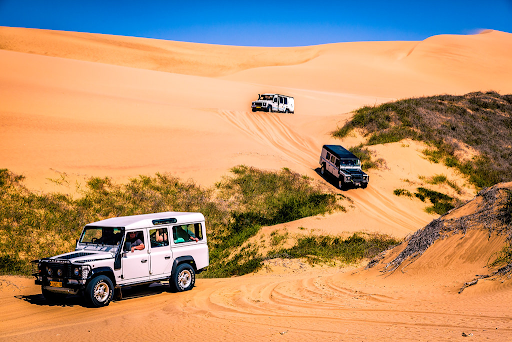
Chalbi Desert 4×4 driving takes motorists across Kenya’s remote northern landscape, where sandy terrain, salt pans, heat and limited services demand careful preparation.
Exploring the Chalbi Desert by 4×4: Kenya’s Remote Northern Landscape
A Chalbi Desert 4×4 excursion takes drivers into one of Kenya’s most remote and striking landscapes. Located east of Lake Turkana in Marsabit County, the Chalbi is a huge salt pan surrounded by an arid environment, with sand dunes and small oases appearing around its northern edges. After rain, parts of the normally dry landscape can even become covered by shallow water.
This is not a conventional road trip. The combination of remote terrain, high temperatures, limited services, and changing ground conditions makes vehicle preparation a major part of the adventure.
Prepare the 4×4 Before Entering the Desert
Before beginning your Chalbi Desert 4×4 journey, inspect the vehicle carefully. Check the tyres, spare wheel, engine oil, coolant, battery, brakes and suspension.
A second spare tyre can be useful on a remote expedition, while a tyre-pressure gauge, compressor, recovery straps and suitable recovery equipment should be considered essential equipment for serious off-road travel.
Carry enough water, fuel and food for the planned route. Do not assume that fuel stations or mechanical assistance will be available once you move deep into the desert.
Expect Sand, Salt and Changing Ground
The terrain around Chalbi can look deceptively simple because of its vast, flat appearance. However, sand and soft ground can quickly change how a vehicle behaves. The official Kenya tourism material describes the desert as a large salt pan with surrounding dunes and oases, while also noting the area’s extreme remoteness.
During Chalbi Desert 4×4 driving, maintain a controlled pace and avoid sudden steering or acceleration on soft surfaces. If the vehicle begins losing traction, stopping early and assessing the ground is generally preferable to continuing until the tyres dig themselves deeper.
Use Tyre Pressure Carefully
Tyre pressure becomes particularly important when driving on loose sand. Depending on the vehicle, tyres, and terrain, experienced off-road drivers may adjust pressures to increase the tyre’s footprint.
However, pressure should never be reduced without understanding the vehicle manufacturer’s limits and the demands of the terrain. After leaving soft sand, pressures should be returned to appropriate road-driving levels before continuing on firmer surfaces.
Respect the Heat
The desert environment can place additional stress on both the vehicle and its occupants. Kenya’s tourism information describes Chalbi as semi-arid, with temperatures rising above 36°C in the warmer months and dropping sharply at night.
Keep an eye on the engine temperature and stop if the vehicle shows signs of overheating. Drivers and passengers should also stay hydrated and protect themselves from prolonged exposure to the sun.
Plan Around Remote Northern Roads
Kenya’s official tourism guidance warns that road conditions can vary considerably and may be very poor in remote areas, recommending that travellers use vehicles capable of handling rough roads. It also advises against driving at night.
That advice is particularly relevant in the Chalbi region. Plan the day’s driving around daylight, identify the intended route before departure, and avoid relying entirely on mobile-phone connectivity.
A local guide or experienced 4×4 operator can also be valuable when entering unfamiliar desert terrain.
Take Time to Appreciate the Landscape
The Chalbi Desert 4×4 experience is about more than negotiating difficult surfaces. The enormous open landscape creates a dramatic contrast with Kenya’s greener regions.
Depending on conditions and location, visitors may encounter wildlife such as oryx and ostriches, while the desert’s northern fringes contain oases that support vegetation, birds and pastoral communities.
Drivers should approach local communities respectfully and avoid disturbing livestock or travelling unnecessarily across sensitive areas.
Choose the Right Vehicle
A proper 4×4 is far more appropriate for a serious Chalbi Desert excursion than an ordinary passenger car. Ground clearance, low-range gearing where available, suitable tyres and recovery capability can become important when the surface changes.
The vehicle should also be mechanically reliable before entering such an isolated area. For motorists comparing rugged vehicles for northern Kenya adventures, AfriCarGroup Auto24 can be useful when exploring different vehicle options.
Conclusion
A Chalbi Desert 4×4 excursion offers a completely different driving experience from Kenya’s major highways and conventional safari routes. Salt pans, sand, intense heat and enormous open spaces create a demanding environment where preparation matters as much as the vehicle itself.
With a properly equipped 4×4, sufficient supplies, careful tyre management, daylight travel and sensible route planning, the Chalbi Desert can become an unforgettable northern Kenya driving adventure.
Would you take your own 4×4 into the Chalbi Desert, or would you prefer travelling with an experienced local driver? Share your choice and your ideal desert vehicle in the comments.