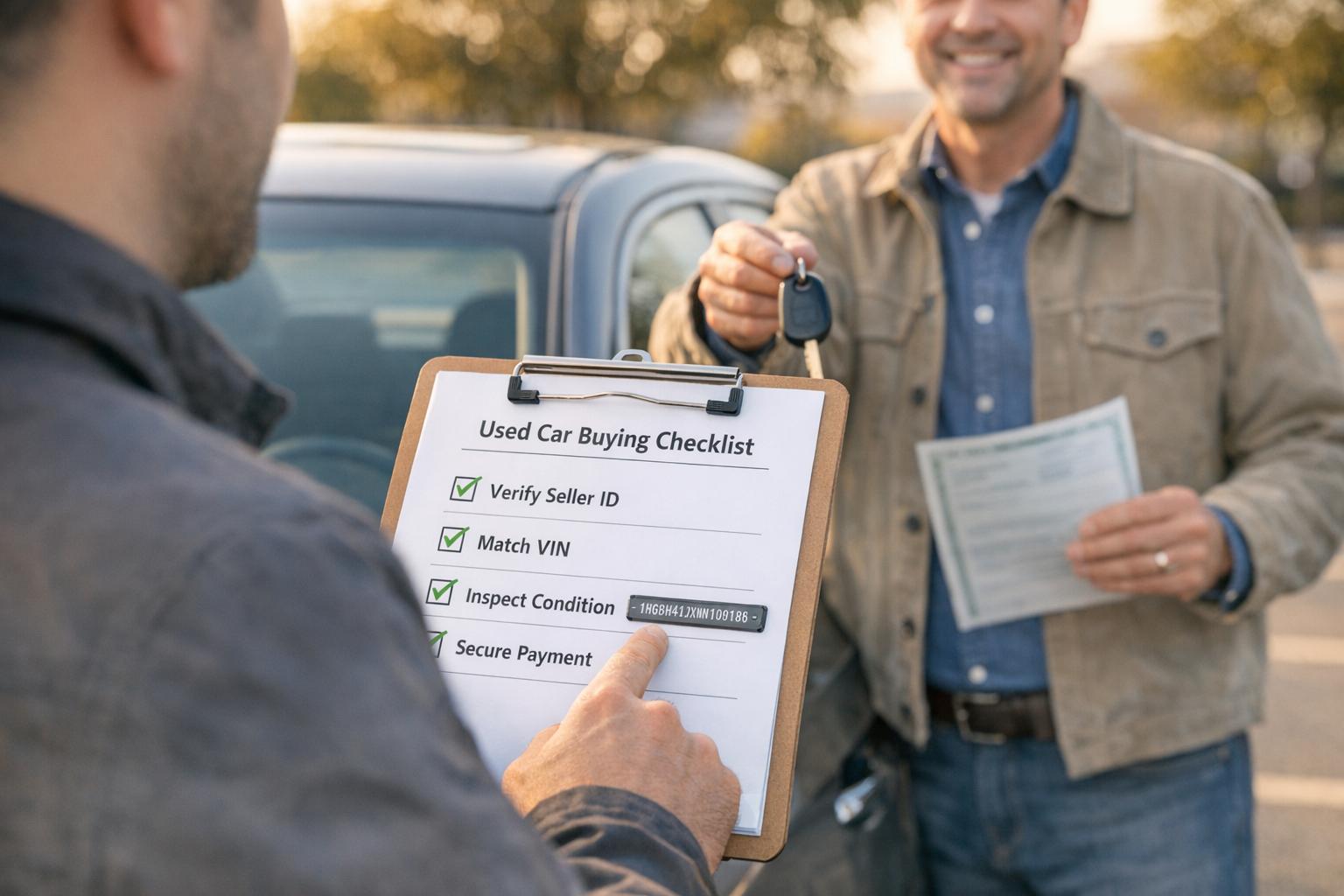
Buying a used car can be risky, especially with the potential for scams and hidden issues. To protect yourself, follow this checklist:
- Verify the Seller: Confirm their identity and credentials. Avoid unlicensed sellers or "curbstoners" who may lack proper documentation.
- Check Documents: Review the logbook, title, and vehicle history. Ensure taxes are paid, and there are no liens or outstanding debts.
- Inspect the Car: Conduct a physical inspection, hire a trusted mechanic, and take a test drive to confirm the car’s condition.
- Secure Payment: Never pay upfront. Use secure payment methods and finalize the transaction in a safe, public location.
- Transfer Ownership: Complete the ownership transfer immediately to avoid legal or financial issues.
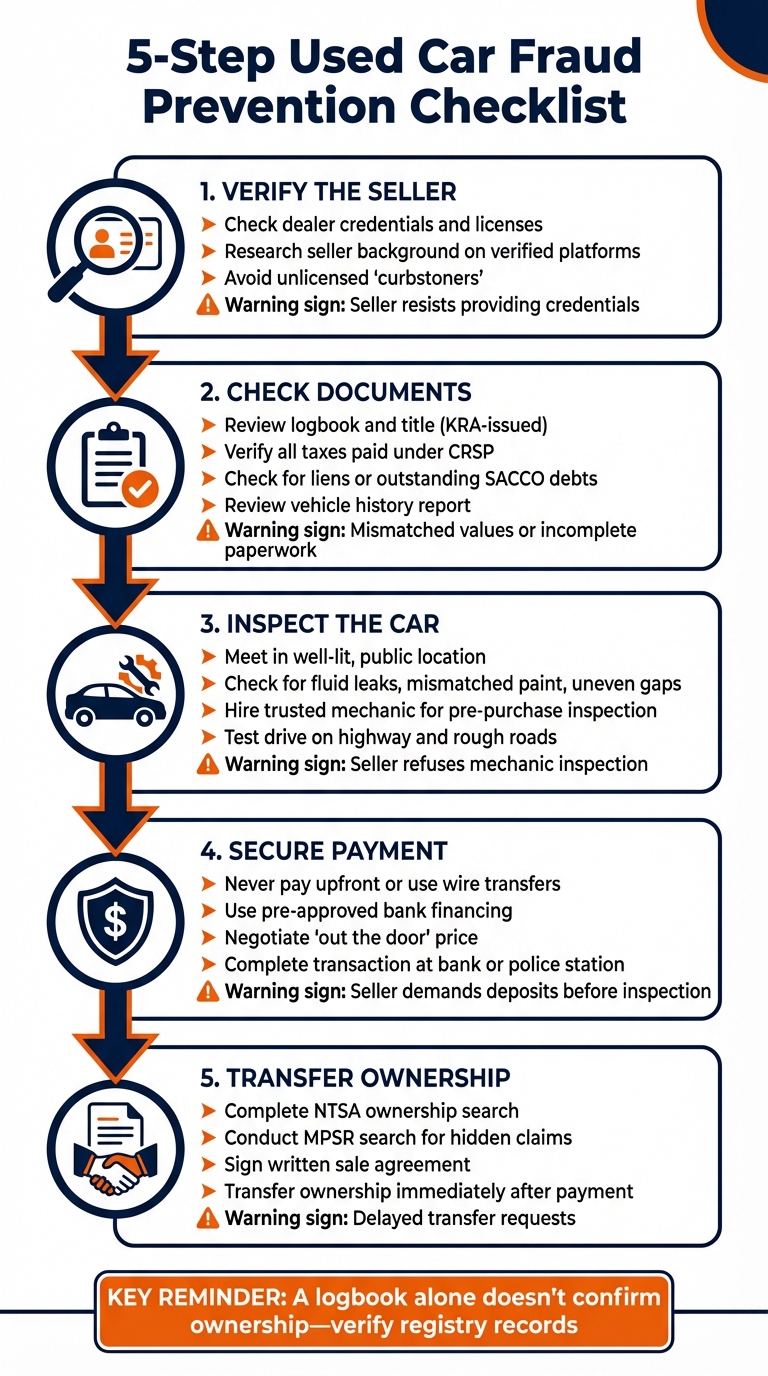
5-Step Used Car Fraud Prevention Checklist
Police Officers Advice – How to Avoid Car Buying Scams in 2026
sbb-itb-e5ed0ed
Verify the Seller’s Identity and Credentials
Step 1: Before diving into your used car purchase, take time to confirm the seller’s identity. This step is crucial to avoid falling victim to scams. The used car market includes both trustworthy sellers and those aiming to exploit buyers, so establishing the seller’s legitimacy is your first safeguard against fraud.
Research the Seller’s Background
Start by investigating the seller’s credentials. If you’re dealing with a dealer, check if they belong to a reputable network. For instance, AUTO24 – a subsidiary of Africar Group Pty Ltd – is a registered dealer with verified marketplaces across Africa. Such corporate affiliations often bring a level of accountability that private sellers may not offer.
Look into public records to verify business licenses and registration details. Cross-check the seller’s name with trusted automotive resources like AutoMag.co.ke to gauge their reputation and track record. If the seller operates through an online platform, see if they offer verified vehicles. Trusted marketplaces, such as AUTO24.africa, highlight verified listings to ensure buyer confidence. Notably, AUTO24.co.ke is expanding its reach in Kenya as of March 2026, aiming to provide certified used car services nationwide.
Know the Difference Between Licensed Dealers and Private Sellers
Understanding the distinction between licensed dealers and private sellers is key to protecting yourself. Licensed dealers generally provide professional inspection reports, clear documentation, and financing options through institutions like SACCOs. They also operate under strict regulations, offering added layers of accountability.
Private sellers, on the other hand, may advertise lower prices but often lack the thorough documentation and verification processes you’d find with dealers. When buying from an individual, you’ll need to put in extra effort to verify the car’s condition and history. Recognizing these differences helps you spot potential risks early on.
Avoid Unlicensed Curbstoners
Curbstoners – unlicensed sellers posing as private individuals – are a significant risk in the used car market. They skirt dealer regulations and accountability, making them a common source of fraud. Warning signs include incomplete or missing documentation, hesitance to provide a clear vehicle history, and pushback if you request an independent mechanic’s inspection.
"Finding a mechanic you can truly trust is one of the most valuable things" – James Mwangi, Contributor, AutoMag.co.ke
If a seller resists independent inspections or cannot provide verifiable credentials, it’s wise to walk away. Stick to verified platforms that prioritize safety, transparency, and thorough vehicle inspections, like AUTO24.africa. Once you’ve confirmed the seller’s legitimacy, you can move forward to reviewing the vehicle’s documents and ownership history.
Inspect the Vehicle Documents and Ownership History
Once you’ve verified that the seller is legitimate, it’s time to dive into the vehicle’s paperwork. Ensuring that all documents align with official records is essential to avoid falling victim to forgery. Pay close attention to key items like the logbook and title.
Check the Logbook and Title
In Kenya, the Kenya Revenue Authority (KRA) oversees vehicle registration and issues logbooks, which serve as proof of a vehicle’s legal status. A valid logbook should confirm that all taxes have been paid under the Comprehensive Revenue Settlement Program (CRSP) used by the KRA. If the vehicle’s documented value doesn’t align with what the CRSP suggests, it might indicate that the car was undervalued during importation, a potential red flag.
Review the Vehicle History Report
A detailed history report can reveal crucial details about the car’s background. Cross-check international records with KRA import data to verify the car’s legitimacy. Professional inspection reports are also invaluable for confirming the car’s condition and uncovering any accident history.
Additionally, check for any outstanding debts tied to the vehicle. In Kenya, vehicles are often financed through SACCOs (Savings and Credit Cooperative Organizations), so it’s important to ensure there are no liens or caveats on the logbook. If a prior owner defaulted on payments to a SACCO, you could face the risk of repossession. To avoid this, consider contacting major SACCOs or requesting a clearance certificate from the seller to confirm the car is debt-free. Once the history report checks out, stay vigilant for any signs of title tampering.
Spot Signs of Title Washing
Even with verified documents and a clear history, you should remain cautious about title washing, a practice where documents are altered to hide a vehicle’s past issues. For example, in July 2025, the High Court of Kenya addressed concerns about the KRA’s CRSP schedule for used car imports, emphasizing how regulatory changes can influence how vehicle values and taxes are documented. This highlights the importance of ensuring all paperwork complies with current KRA standards. Opting for verified marketplaces that offer "inspected and verified" used cars can help you steer clear of title washing and other potential pitfalls.
Conduct a Complete Physical Inspection
Once you’ve ensured the paperwork is in order, the next step is to evaluate the car’s physical condition. Skipping this part could leave you with unexpected and costly repairs down the road.
Inspect the Car in Person
Always meet the seller in a well-lit, public space to check the car thoroughly. Start by examining the ground beneath where the car was parked – fresh oil or fluid stains can be a red flag for leaks or engine issues. Walk around the car, paying close attention to details like mismatched paint, uneven panel gaps, or signs of bodywork, which could indicate past accidents. This hands-on inspection helps verify whether the car’s condition matches its documentation.
Hire a Trusted Mechanic
Bringing in a qualified mechanic for a pre-purchase inspection is a smart move. A professional can uncover hidden problems, such as structural damage or worn-out suspension parts, that you might miss. They’ll also check if the tires are appropriate for the car and its intended use, as mismatched or overly worn tires can point to alignment or suspension issues. If you’re purchasing through a verified marketplace, look for cars labeled as "inspected and verified" – this often means a professional has already conducted a detailed evaluation.
Test Drive the Car
Once the inspection is complete, take the car out for a test drive to ensure it performs well on the road. Drive on both highways and rougher roads to evaluate its suspension, handling, and overall comfort. Pay attention to how the brakes respond, whether the steering feels aligned, and if the gear shifts are smooth. Use this test drive to confirm your mechanic’s findings and to make sure the car suits your driving habits – whether that’s navigating city streets or cruising on the highway.
Secure the Payment and Transaction Process
Once you’ve confirmed the vehicle’s condition and history, it’s time to focus on safeguarding your finances during the payment process. This step is critical, as many scams occur at this stage. Taking the right precautions can help you avoid falling victim to fraud.
Avoid Upfront Payments
Never make deposits or payments before inspecting the car and verifying its legitimacy. Scammers often request wire transfers or gift cards upfront, only to disappear without delivering the vehicle. If a seller insists on payment before you’ve finalized the deal or claims they need money to "hold" the car, it’s a red flag. Walk away. Legitimate sellers understand that payment happens only after all terms are agreed upon and the car has been verified. Once you’re ready to proceed, choose payment methods that offer additional protection.
Use Secure Payment Methods
Pre-approved financing from a bank or credit union can help you secure a better deal and avoid dealer markups. As U.S. News highlights, "Having pre-approved financing before you visit any dealerships is one of our top car-shopping tips". Focus on the total "out the door" price, which includes the car’s cost, interest rate, and loan term, rather than just the monthly payment. According to U.S. News, "Once you’ve negotiated your ‘out the door’ price, allow the salesperson to meet or beat your financing deal". Also, keep your payment method private until you’ve finalized the price. Dealers often profit more from in-house financing and may refuse to negotiate if they know you’re paying cash or using external financing.
Finalize the Transaction in Public
Complete the sale in a safe, public location like a bank, police station, or another well-lit area with security cameras. These locations discourage criminal activity since they provide witnesses and surveillance. Banks are especially convenient because they allow you to verify funds and complete the title transfer securely. Avoid meeting at private homes, remote parking lots, or any location that feels unsafe. A neutral, secure setting protects both parties and ensures there’s a record of the transaction if disputes arise later. By following these steps, you can keep the entire payment process secure and stress-free.
Conclusion: Your Fraud Prevention Checklist Summary
When buying a used car, approach the process as you would any formal business transaction. As Autochek Africa puts it, "Treating car purchases as formal commercial transactions, rather than informal exchanges, significantly reduces legal and financial risk". This approach helps shield you from scams and ensures you’re not left with a problematic vehicle.
Here’s what you need to focus on:
- Verify the seller’s identity using official registry records.
- Conduct essential searches like an NTSA ownership search and an MPSR search to uncover hidden liens or claims.
- Insist on a written sale agreement that clearly outlines all terms of the transaction.
- Make payments traceable by using formal banking channels.
Remember, a logbook alone doesn’t confirm ownership – it’s the verified registry records that matter.
Autochek Africa highlights, "A safe vehicle purchase requires: An NTSA ownership search, an MPSR search under the Movable Property Security Rights Act, a written sale agreement, [and] prompt ownership transfer". Each of these steps is designed to counter common scams. Skipping even one could leave you vulnerable to financial or legal troubles.
Finally, initiate the ownership transfer immediately after payment. This prevents any liability for traffic offenses or fraudulent claims, like the seller reporting the car as stolen. For imported vehicles, double-check customs entries and duty payment records to avoid issues with revenue authorities. These steps will ensure the car is legally and securely yours without unexpected complications.
FAQs
How do I confirm the seller is the real owner?
To ensure the seller is the legitimate owner of the vehicle, start by examining the original vehicle registration documents. Confirm that the name on these documents aligns with the seller’s ID. Next, verify that the Vehicle Identification Number (VIN) listed on the documents matches the VIN on the car itself. For added assurance, reach out to the relevant vehicle registration authority to confirm ownership details and check if there are any liens or claims tied to the vehicle.
How can I check if the car has a loan or lien?
To check if a car in Kenya has an outstanding loan or lien, you can use the NTSA’s Transport Integrated Management Systems (TIMS). Simply log in to the TIMS portal, input the vehicle’s registration number, and review the ownership details. The NTSA database provides information on any financial encumbrances, allowing you to verify whether the vehicle is clear of loans or liens.
What’s the safest way to pay for a used car?
When selling a used car, it’s crucial to use secure payment methods to avoid potential scams. Two of the safest options are cashier’s checks and bank wire transfers.
- Cashier’s Checks: To ensure the check is legitimate, arrange to meet the buyer at their bank. This allows you to verify the check’s authenticity on the spot before completing the transaction.
- Bank Wire Transfers: These are another secure option, but it’s wise to confirm the transfer with both your bank and the buyer’s bank. This extra step ensures the funds have been successfully transferred into your account.
If possible, avoid accepting large sums of cash. If cash is the only option, take precautions to verify its authenticity and ensure your safety during the exchange. Always double-check the legitimacy of any payment method before finalizing the deal.
Related Blog Posts
- Avoid scams when buying a car in Kenya
- What to Look Out for When Buying a Second-Hand Car in Kenya
- 7 Mistakes to Avoid When Buying a Used Car in Kenya
- Used Car Buying Checklist Kenya: How to Avoid Scams (2026)