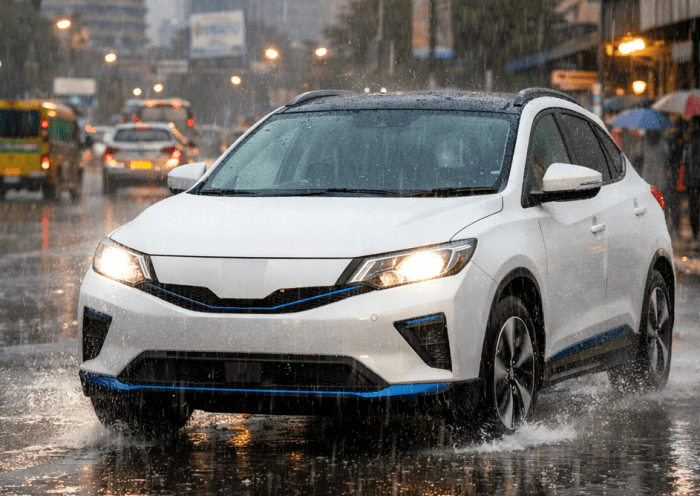
As electric vehicles slowly become more common on Kenyan roads, many drivers still pause when the rain starts pouring. It’s a fair question: can you safely drive an electric car through rain, puddles, or even storms?
The simple answer is yes. But like most things in driving, the full picture is a bit more nuanced. Let’s break it down in a clear, practical way for Kenyan drivers.
Are Electric Cars Built to Handle Rain?
Modern electric vehicles (EVs) are designed with safety as a priority.
Their high-voltage components, including the battery pack, are tightly sealed and insulated. These systems are protected against water intrusion, meaning rain alone cannot damage the car’s electrical system.
Whether you’re driving through a drizzle in Nairobi or a heavy downpour along the highway, your EV is engineered to handle it.
👉 For more insights into how modern vehicles are built and tested, you can explore detailed guides on automag.co.ke.
How Electric Cars Perform on Wet Roads
When it comes to driving in rain, electric cars behave very similarly to petrol or diesel vehicles.
However, they do have one subtle advantage.
Because the battery is placed low in the chassis, EVs tend to have a lower centre of gravity. This can improve stability, especially on wet tarmac.
That said, physics still applies:
- Tyres lose grip on slippery roads
- Braking distances increase
- Visibility reduces in heavy rain
Practical Tip:
Always reduce speed in wet conditions and ensure your tyres have good tread. Even the most advanced car cannot compensate for worn-out tyres.
👉 If you’re considering upgrading to a more stable or modern vehicle, platforms like auto24.co.ke list options such as the Nissan Leaf, Toyota Aqua, and Mazda Demio, which are commonly available in Kenya.
Is It Safe to Charge an EV in the Rain?
Yes, charging an electric vehicle in the rain is safe.
Charging systems are designed for outdoor use and include multiple safety features:
- Power only flows once a secure connection is made
- Connectors are sealed against water
- Charging stations are weatherproof
However, drivers should avoid unsafe practices.
What to Avoid:
- Using extension cables outdoors
- Charging from unprotected sockets
- Improvised wiring setups
These risks apply not just to EVs, but to any electrical equipment used outside.
👉 You can learn more about EV charging and safety on autoskenya.com.
Does Rain Affect Electric Car Range?
Rain can have a small impact on how far your EV can travel.
Here’s why:
- Wet roads create more rolling resistance
- Traffic tends to increase during bad weather
- Drivers use headlights, wipers, and air conditioning more frequently
All of these factors draw power from the battery.
What This Means:
For most daily trips, the difference is minimal. However, on longer journeys, it’s wise to plan ahead and keep a buffer in your battery level.
Flooded Roads: Where Caution Is Critical
While rain itself is not a problem, floodwater is a different story.
Deep water can damage any vehicle, whether electric or fuel-powered.
Potential risks include:
- Brake system damage
- Electrical component issues
- Water entering critical parts of the vehicle
Simple Rule:
If the water level looks high or the road is flooded, don’t risk it. Turn around and find an alternative route.
This applies to all cars, not just EVs.
What Kenyan Drivers Should Keep in Mind
Driving an electric car in the rain is safe, but good habits matter more than the type of vehicle.
Key Tips:
- Maintain good tyre condition
- Drive at moderate speeds in wet weather
- Avoid flooded roads
- Use proper charging equipment
For drivers interested in switching to electric mobility, EV24.africa offers import options for electric cars, expanding choices for Kenyan buyers looking to embrace cleaner transport.
Final Thoughts
Electric cars are not fragile machines that fear rain. They are built to operate safely in everyday conditions, including wet weather.
In reality, the biggest risk during rain is not the car, but how it is driven.
So whether you’re behind the wheel of an EV or a traditional car, safe driving habits remain your best protection.