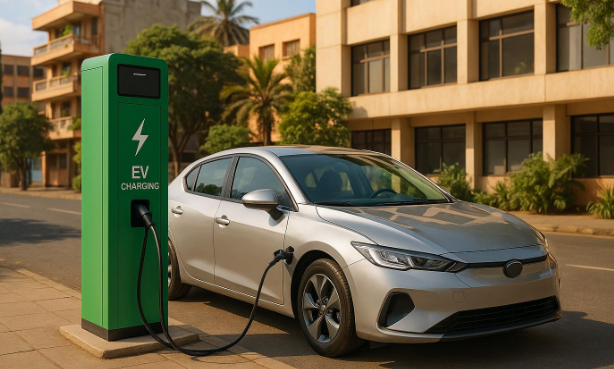
Electric vehicles are no longer a distant dream for Kenyan drivers — they are arriving in growing numbers, imported by individuals and businesses looking to cut fuel costs and reduce their environmental footprint. But as interest in EVs grows across the country, so does one very practical question: how well do electric cars actually perform in Kenya’s specific climate and terrain conditions? This is not a trivial concern. Kenya’s geography and weather are remarkably varied — from the hot, humid coast to the cool highlands, from smooth urban tarmac to rough rural tracks. For the latest automotive news and guides tailored to Kenyan drivers, visit automag.co.ke and autoskenya.com.
Understanding how these local conditions interact with EV technology is essential for any Kenyan buyer considering making the switch. This article breaks down the key climate and terrain factors that affect electric car performance in Kenya, what they mean in practical terms, and how EV owners can get the most out of their vehicles in local conditions.
Kenya’s Climate: More Varied Than You Might Think
One of the most important things to understand about Kenya is that it does not have a single, uniform climate. The country spans a remarkable range of environments within a relatively compact geography — and each of those environments creates different conditions for an electric vehicle.
The Hot Coastal Zone
Mombasa and the coastal strip experience high temperatures year-round, typically ranging from 25°C to 35°C, combined with high humidity. This is one of the more demanding environments for EV battery technology. Heat is one of the primary enemies of lithium-ion batteries — the chemistry that powers virtually every modern electric car. Sustained exposure to high ambient temperatures accelerates battery degradation over time, reducing the battery’s total capacity and shortening its usable lifespan.
In practical terms, a coastal EV driver may notice that their car’s maximum range decreases more quickly over years of ownership compared to a driver in a cooler climate. Most modern EVs include thermal management systems designed to cool the battery pack — but in a consistently hot and humid coastal environment, those systems work harder and consume more energy, which itself reduces available range on a given charge.
The Cool Central Highlands
Nairobi and the surrounding central highlands sit at altitudes between 1,500 and 2,500 metres above sea level. Temperatures here are considerably cooler, typically ranging from 10°C to 28°C, with nights that can drop quite low. This moderate temperature range is actually close to ideal for lithium-ion battery performance — the chemistry operates most efficiently between about 15°C and 35°C.
However, cool morning temperatures can temporarily reduce battery output and available range until the battery warms to its optimal operating temperature. This is a minor and manageable effect for most drivers — pre-conditioning the car (warming the battery while still plugged in) before a morning journey is a simple and effective countermeasure available on most modern EVs.
The Arid North and East
Northern and eastern Kenya — including areas around Marsabit, Garissa, and Mandera — experience some of the hottest and driest conditions in the country, with temperatures regularly exceeding 35°C and occasionally pushing past 40°C. For EVs operating in these regions, battery thermal stress is a significant concern, particularly for long-distance travel where the vehicle has limited opportunity to cool between drives.
Additionally, the limited charging infrastructure in these regions makes EV use challenging for long-distance travel. Until the charging network expands into northern and eastern Kenya, EVs are best suited to routes with reliable charging access along the way.
The Western Highlands and Rift Valley
Western Kenya and the Rift Valley offer a mixed picture — generally moderate temperatures but with significant elevation changes, particularly on routes that cross the escarpments. The Rift Valley escarpments on the Nairobi–Naivasha and Nairobi–Nakuru routes, for example, involve long climbs and descents that have specific implications for EV performance, as discussed later in this article.
Heat and Battery Performance: What Every Kenyan EV Driver Should Know
Battery technology is at the heart of every electric vehicle, and temperature is the single biggest environmental variable affecting battery performance. Understanding this relationship helps EV owners in Kenya manage their vehicles more intelligently.
How Heat Affects Range
High ambient temperatures increase the internal resistance within battery cells, which reduces efficiency and therefore available range. On a very hot day in Mombasa or Turkana, an EV that is rated for, say, 400 km of range under standard test conditions may deliver noticeably fewer kilometres in practice. The air conditioning system, which is essential in hot weather, also draws significant power from the battery — further reducing range compared to a drive in cool conditions with no climate control running.
Practical tip: Park your EV in shade wherever possible in hot climates. Pre-cool the cabin while the car is still connected to a charger before your journey — this reduces the load on the air conditioning system during the drive and preserves more battery energy for propulsion.
How Heat Affects Battery Longevity
Beyond day-to-day range effects, sustained heat exposure is the main cause of long-term battery degradation in lithium-ion cells. Battery degradation is the gradual, permanent reduction in the battery’s maximum capacity — once degraded, that capacity cannot be recovered without replacing the battery pack. Drivers in consistently hot regions of Kenya should pay particular attention to battery care to slow this process.
Practical tip: Avoid leaving your EV parked in direct sunlight for extended periods in hot weather. If your EV supports it, set the charge limit to 80% rather than 100% for daily use — a lower state of charge generates less heat during storage and slows long-term degradation. Only charge to 100% when you genuinely need the maximum range for a specific journey.
Thermal Management Systems
Most modern EVs — including models increasingly available in Kenya — include active battery thermal management systems (BTMS) that use liquid cooling or heating to keep the battery pack within its optimal temperature range. These systems are effective but consume energy themselves. In consistently hot conditions, the BTMS runs more frequently and consumes more power, which is a hidden but real cost of operating an EV in Kenya’s warmer regions. When evaluating an EV for purchase, it is worth checking whether the model includes an active (liquid) thermal management system rather than a simpler passive (air) system — the former performs significantly better in hot climates.
Altitude and Its Surprising Benefits for EVs
One of the less obvious but genuinely positive factors for EVs in Kenya is altitude. Much of the country’s most populated and economically active area — Nairobi, Nakuru, Kisumu, and the central highlands generally — sits at significant elevation. And altitude, perhaps counterintuitively, offers some real advantages for electric vehicle performance.
Cooler Temperatures at Altitude
As already noted, the moderate temperatures typical of Kenya’s highlands are close to ideal for lithium-ion battery chemistry. EVs operating primarily in Nairobi and the surrounding highlands experience lower thermal stress than those operating on the coast or in the north, which translates to slower battery degradation and more consistent day-to-day range.
Thinner Air and Aerodynamic Efficiency
At higher altitudes, the air is thinner — there are fewer air molecules per cubic metre. For conventional petrol and diesel engines, this is a problem, because thinner air means less oxygen for combustion and therefore reduced engine power. For electric motors, however, thinning air is actually a slight advantage: aerodynamic drag is slightly reduced at altitude because the air offers less resistance. This means an EV cruising at highway speed in Nairobi experiences marginally less drag than the same car cruising at the same speed at sea level — contributing to slightly better efficiency.
Regenerative Braking on Highland Roads
Kenya’s highlands and escarpments create another advantage for EVs that does not exist for conventional cars: regenerative braking recovery on long descents. When an EV decelerates or travels downhill, the electric motor acts as a generator — converting the vehicle’s kinetic energy back into electrical energy and feeding it back into the battery. On long descents like the Naivasha escarpment, the Limuru road, or the Mai Mahiu drop into the Rift Valley, an EV can recover a meaningful amount of energy that would otherwise be wasted as heat in brake pads. This effectively extends range on routes with significant elevation changes, partially compensating for the energy consumed climbing those same hills.
Practical tip: Use the maximum available regenerative braking setting on descents to maximise energy recovery. Many EVs allow you to select the level of regeneration — a higher setting recovers more energy and reduces wear on the physical brake pads as a bonus.
Terrain: How Kenya’s Roads Challenge and Reward EVs
Kenya’s road network is as varied as its climate — ranging from smooth dual-carriageways in Nairobi to rough rural tracks in remote counties. Understanding how different terrain types affect EV performance helps drivers plan routes and manage range expectations realistically.
Urban Roads: Where EVs Excel
The stop-start nature of city driving — which is notoriously inefficient for petrol and diesel engines — is precisely where electric motors shine. In Nairobi’s often congested streets, an EV uses regenerative braking every time it slows for traffic, recovering energy that a conventional car simply wastes as heat. Electric motors deliver instant torque from a standstill, making city driving smooth and effortless. EVs in urban Kenya are in their element — efficient, quiet, and responsive.
Additionally, the relatively short daily distances covered by many urban Nairobi drivers — often 30 to 60 km per day — fit comfortably within the range of even modestly specified EVs, making range anxiety largely a non-issue for city-focused use.
Highways: Managing Range on Long Runs
Highway driving is where EVs face their greatest range challenge. At sustained high speeds — 90 to 110 km/h on routes like the Nairobi–Mombasa Highway — aerodynamic drag increases significantly and the motor must work continuously without the energy recovery opportunities that stop-start urban driving provides. Real-world highway range can be noticeably lower than the official rated range, which is typically measured under more favourable test conditions.
On a long-distance route like Nairobi to Mombasa (approximately 490 km), an EV with a rated range of 400 km under test conditions may deliver closer to 300 to 350 km of real-world highway range depending on speed, load, air conditioning use, and road gradient. The current state of Kenya’s charging infrastructure along major highways is improving but is not yet comprehensive — making careful route planning essential for long-distance EV journeys.
Practical tip: For highway trips in an EV, plan your charging stops in advance using an EV charging map or app. Travel at 90 km/h rather than 110 km/h where the road and time permit — the reduction in aerodynamic drag at lower speeds significantly improves range. Turn off air conditioning where comfortable and use the ventilation fan instead.
Hilly and Escarpment Routes
Kenya’s escarpment routes — including the Limuru Road, the Naivasha road, Mai Mahiu, and sections of the Nakuru highway — involve sustained climbs of significant altitude gain. Climbing consumes considerably more battery energy than flat road driving, as the motor must work against gravity in addition to aerodynamic drag and rolling resistance. A steep climb of 500 metres of altitude gain can consume energy equivalent to covering an additional 20 to 40 km of flat road, depending on the vehicle and gradient.
However, the corresponding descents recover a portion of that energy through regenerative braking — making hilly routes less of a net energy penalty than the climbs alone would suggest. Drivers who regularly travel routes with significant elevation changes should calibrate their range expectations accordingly and plan charging stops with the hills factored in.
Rough and Unpaved Roads
A meaningful proportion of Kenya’s road network remains unpaved or in poor condition — particularly in rural areas, secondary roads, and routes to farms, markets, and remote communities. For EVs, rough roads present two specific challenges: increased rolling resistance (rough surfaces require more energy to traverse than smooth tarmac) and the risk of damage to the battery pack, which sits low on the vehicle in most EV designs.
Most modern EVs have battery packs with protective underbody shields, but these are not designed for serious off-road use. Ground clearance is also lower on many EV models than on comparable SUVs or 4x4s. Kenyan buyers who regularly travel on rough roads should pay close attention to the ground clearance and underbody protection of any EV they consider purchasing. A car like the BYD Atto 3, which offers reasonable ground clearance and a robust underbody, handles light rough roads considerably better than a low-slung sedan EV.
Rain, Flooding, and Electrical Safety
Kenya’s rainy seasons — the long rains from March to May and the short rains from October to December — bring specific challenges for all vehicles, and EVs are no exception. A common concern among potential EV buyers in Kenya is whether electric cars are safe to drive in the rain or through flooded sections of road.
EVs and Rain: Perfectly Safe
Modern electric vehicles are engineered to strict international standards for water and dust ingress protection (rated using the IP — Ingress Protection — scale). Battery packs, motors, and high-voltage electrical systems are all sealed to protect against rain, road spray, and even shallow water crossings. Driving an EV in Kenyan rain — including heavy tropical downpours — is completely safe under normal road conditions. The vehicles are designed and tested for it.
Flooding: Apply the Same Caution as Any Vehicle
Where EV drivers should exercise caution is in deep flooding — the same caution that any responsible driver should apply with any vehicle. While EV battery packs are sealed, deep water submersion beyond the manufacturer’s specified depth can compromise electrical systems over time. The general rule is simple: if you would not attempt a flooded road in a conventional car, do not attempt it in an EV either. Most modern EVs can handle water crossings of up to 30 to 40 cm at low speed without issues, but deeper flooding should always be avoided.
Practical tip: After driving through any significant flooding, have the underside of your EV inspected by a qualified technician to confirm no damage has occurred to the battery pack casing or high-voltage connectors.
Humidity and Charging Safety
High humidity — particularly in coastal Kenya — raises questions about the safety of charging an EV outdoors. Modern EV charging equipment, whether home wall boxes or public charging stations, is designed to function safely in rain and humid conditions when properly installed and maintained. Always use charging equipment from reputable manufacturers and ensure home charging installations are carried out by qualified electricians. Do not use damaged charging cables or connectors, particularly in wet conditions.
Kenya’s Charging Infrastructure: The Real Practical Challenge
Of all the factors affecting EV ownership in Kenya, the state of the charging infrastructure is arguably the most significant practical challenge — more so than climate or terrain for most drivers. Range anxiety — the fear of running out of charge before reaching a charging point — remains a genuine concern on long-distance routes where charging stations are sparse.
Urban Charging
In Nairobi, charging infrastructure is developing reasonably well, with public charging stations increasingly available at shopping centres, hotels, and business parks. Home charging — using a dedicated wall box installed by an electrician — is the most practical and cost-effective solution for urban EV owners who return to a fixed base each day. A standard home wall box can charge most EVs to full overnight, ready for the next day’s driving.
Highway and Inter-City Charging
The Nairobi–Mombasa corridor has seen some charging station development, particularly in Nairobi, Voi, and Mombasa, but coverage along the full route remains patchy. Other major routes — Nairobi to Kisumu, Nairobi to Nakuru, and Nairobi to Eldoret — are similarly incomplete in terms of charging availability. This makes long-distance EV travel in Kenya viable but requires significantly more planning than the same journey in a petrol or diesel car.
For Kenyan drivers exploring the EV market, EV24.africa is a valuable resource for importing electric vehicles suited to African conditions, with information on models, specifications, and the import process. As Kenya’s charging network grows alongside rising EV adoption, the long-distance viability of electric cars on Kenyan roads will continue to improve.
Solar Charging: A Kenyan Opportunity
One aspect of the Kenyan context that actually favours EV adoption is the country’s abundant solar resource. Kenya receives excellent solar irradiation across most of its territory for most of the year. Solar-powered home charging — using rooftop solar panels connected to a home charging system — is a genuinely viable and increasingly affordable option for Kenyan EV owners, particularly for businesses and homeowners who can offset the upfront installation cost against long-term fuel savings. Solar charging effectively allows drivers to charge their EVs using free, clean energy generated on their own property.
Which Electric Cars Suit Kenya’s Conditions Best?
Not all EVs are created equal when it comes to Kenya’s climate and terrain. Some models are better suited to local conditions than others, and knowing what to look for makes the purchase decision considerably simpler.
Key Features to Look for When Buying an EV for Kenya
• Active liquid cooling battery thermal management system — essential for managing heat in coastal and northern regions
• Adequate ground clearance (200 mm or more preferred) for navigating rough roads and speed bumps
• IP67 or higher battery pack water ingress protection rating
• Real-world range of at least 300 km to manage Kenya’s inter-city distances with charging stops
• DC fast charging compatibility to minimise time spent at public charging stations
• Regenerative braking with adjustable intensity — valuable for energy recovery on Kenya’s hilly routes
Exploring EV Options for the Kenyan Market
For buyers ready to explore specific EV models available for import into Kenya, EV24.africa provides a curated selection of electric vehicles suited to African road and climate conditions. Models like the BYD Atto 3, MG ZS EV, and Nissan Leaf are among those gaining traction in the Kenyan market, offering a mix of practical range, charging flexibility, and thermal management capability that suits local conditions reasonably well.
If you are comparing EV options alongside conventional hybrid or petrol alternatives, platforms like auto24.co.ke list a wide range of used vehicles in Kenya — including hybrid models such as the Toyota Prius, Toyota Aqua, and Volkswagen Golf GTE — that offer a practical bridge between conventional and fully electric motoring while Kenya’s charging infrastructure continues to develop.
Practical Tips for Kenyan EV Owners: Getting the Most From Your Car
Managing Range in Hot Weather
• Pre-cool the cabin while still connected to the charger before morning journeys
• Park in shade to reduce the thermal load on the battery during the day
• Set charge limits to 80% for daily use, reserving 100% for long-distance trips
• Use seat cooling rather than cabin air conditioning where available — it uses less energy
• Drive at moderate speeds on hot days — every 10 km/h above 90 km/h noticeably increases energy consumption
Managing Range on Long Highway Trips
• Plan charging stops before departing — do not rely on finding a charger along the way
• Travel at 90 km/h rather than 110 km/h where time allows — the range benefit is significant
• Keep the car loaded as lightly as possible — extra weight reduces range
• Use the highest regenerative braking setting on hilly sections to maximise energy recovery
• Monitor real-time energy consumption through the car’s infotainment system and adjust driving style accordingly
Battery Care and Long-Term Health
• Avoid charging to 100% daily — keep the regular charge limit at 80% for longevity
• Avoid depleting the battery below 10% regularly — both deep discharge and full charge stress the cells
• In hot climates, charge during cooler parts of the day (early morning or evening) where possible
• Have the battery’s state of health (SoH) checked annually by a qualified EV technician
• Keep the car plugged in when parked in very hot conditions if the vehicle supports active thermal management while charging — this keeps the battery cool without consuming stored charge
Preparing for Kenya’s Rainy Season
• Inspect charging cables and connectors before the rainy season for any damage or exposed wiring
• Ensure home charging equipment is properly weatherproofed and installed by a qualified electrician
• Avoid driving through deep flooded sections — apply the same caution as you would with any vehicle
• After any significant flooding, have the underbody and battery casing inspected by a qualified technician
Frequently Asked Questions (FAQs)
1. Does heat damage EV batteries in Kenya?
Yes, sustained heat exposure accelerates lithium-ion battery degradation over time, permanently reducing the battery’s maximum capacity. This is most relevant for drivers in coastal or northern Kenya where temperatures are consistently high. Active thermal management systems and good battery care habits significantly slow this process.
2. Does altitude affect EV performance in Kenya?
Kenya’s highlands actually offer mild advantages for EVs — cooler temperatures favour battery efficiency, slightly thinner air reduces aerodynamic drag, and hilly terrain creates regenerative braking opportunities on descents. Nairobi and the central highlands are among the more favourable environments for EV ownership.
3. Can I drive an EV safely in Kenyan rain?
Yes. Modern EVs are engineered to strict waterproofing standards and are completely safe to drive in rain, including heavy tropical downpours. Exercise the same caution as you would in any vehicle when approaching flooded road sections — do not attempt deep flooding.
4. What is the real-world range of an EV on Kenyan highways?
Real-world highway range is typically 15 to 25 percent lower than an EV’s official rated range, due to sustained speed, air conditioning use, and road gradients. An EV rated at 400 km may deliver 300 to 340 km in real Kenyan highway conditions. Always factor this in when planning long-distance trips.
5. Where can I charge an EV in Kenya?
Nairobi has a growing number of public charging stations at shopping malls, hotels, and business parks. Along the Nairobi–Mombasa corridor, charging points are available in Nairobi, Voi, and Mombasa, though coverage is not yet comprehensive. Home charging using a wall box is the most practical primary charging solution for most Kenyan EV owners.
6. How do rough roads affect EVs in Kenya?
Rough roads increase rolling resistance and energy consumption, and can pose a risk of underbody damage to low-clearance EVs. Choose an EV with adequate ground clearance (200 mm or more) and a robust underbody protection system if you regularly travel on unpaved or rough roads.
7. Is solar charging viable for EVs in Kenya?
Yes — Kenya’s excellent solar resource makes solar-powered home charging a genuinely attractive option. Rooftop solar panels connected to a home EV charging system can significantly reduce or eliminate electricity costs for charging, making EV ownership even more economical in the Kenyan context.
8. Where can I import an EV suited to Kenyan conditions?
EV24.africa specialises in electric vehicle imports for the African market, including Kenya, with a selection of models suited to local road and climate conditions.
Conclusion
Kenya’s climate and terrain present a genuinely varied set of conditions for electric vehicle operation — some challenging, some surprisingly advantageous. The coastal heat demands careful battery management. The cool highlands offer near-ideal operating temperatures. The escarpments and hilly roads create regenerative braking opportunities that partially offset the energy cost of climbing. And the stop-start nature of Nairobi city traffic is precisely the environment where EVs are most efficient. The key for any Kenyan EV owner or prospective buyer is to understand these factors and choose, maintain, and operate their vehicle accordingly. With the right EV, the right habits, and a realistic understanding of Kenya’s charging infrastructure, electric vehicle ownership in Kenya is not just viable — it is increasingly practical and rewarding. For more expert automotive guides and driving tips tailored to Kenya, visit automag.co.ke and autoskenya.com.