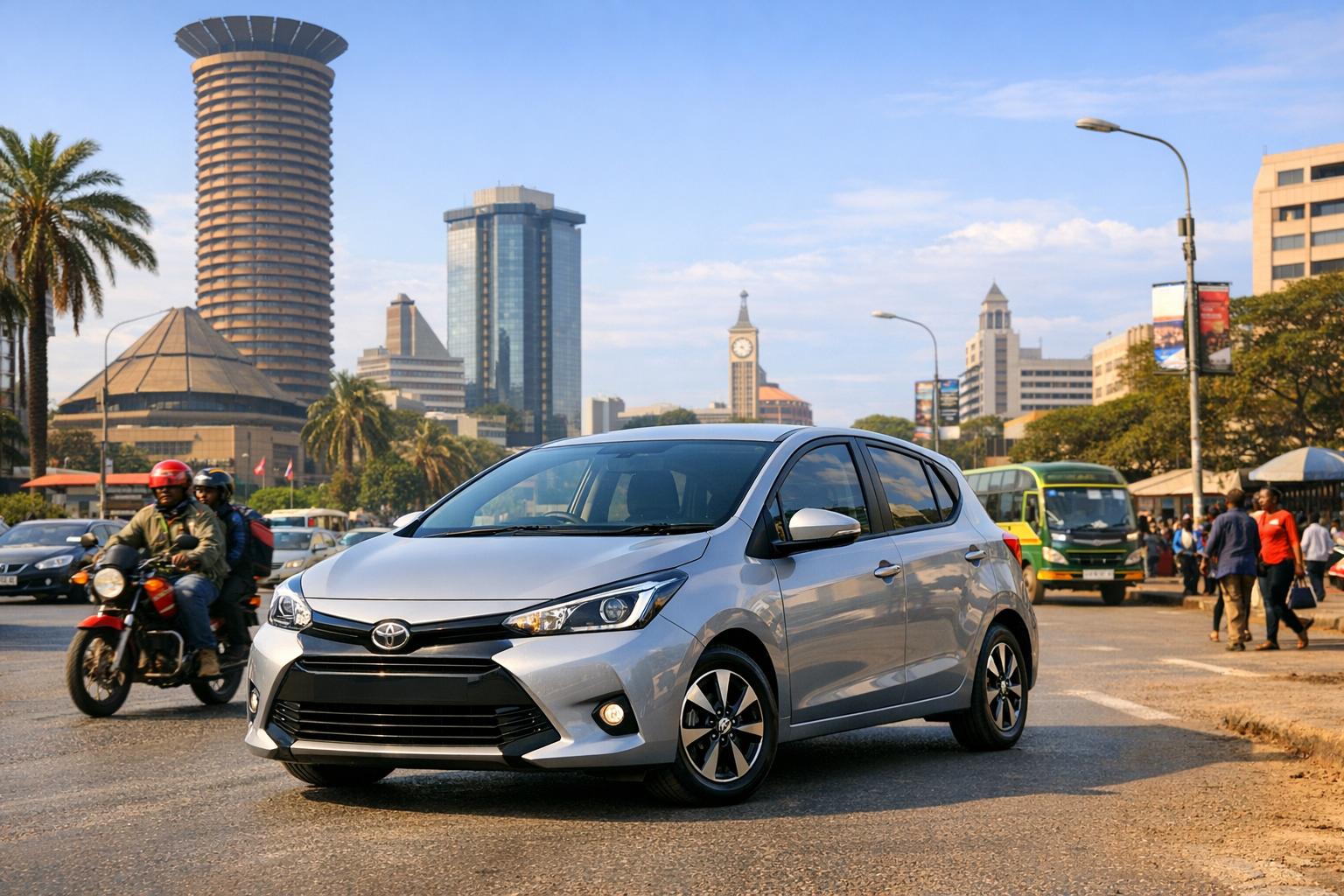
Navigating Nairobi’s congested roads in 2026 demands compact cars that excel in fuel efficiency, easy handling, and affordability. With tight parking spaces, fluctuating fuel prices, and rough roads, choosing the right car can save you time, money, and stress. Here are the top picks:
- Toyota Vitz: Reliable, affordable (KES 400K–1M), and fuel-efficient (18–22 km/l). Spare parts are widely available, but its low ground clearance (5.1 inches) may require extra care.
- Nissan March: Budget-friendly (KES 300K–1M) with great mileage (15–26 km/l). Compact for tight spaces but has a low ground clearance (4.6 inches).
- Honda Fit: Spacious and fuel-efficient (21–36 km/l for hybrids). Higher price (KES 470K–3.2M) but great for Uber/Bolt drivers. Watch out for hybrid battery costs.
- Mazda Demio: Sporty design, decent fuel economy (16–20 km/l), and affordable (KES 700K–1.2M). Slightly less spacious than competitors.
- Suzuki Alto: Perfect for city driving, with outstanding fuel efficiency (18–35 km/l) and low cost (KES 380K–850K). Best for short trips due to limited stability on highways.
- Toyota Passo: Spacious front seats, excellent mileage (24.8–27.6 km/l), and affordable (KES 450K–850K). Reliable but modest acceleration.
Quick Comparison
| Model | Fuel Efficiency | Price Range (KES) | Ground Clearance | Key Feature |
|---|---|---|---|---|
| Toyota Vitz | 18–22 km/l | 400K–1M | 5.1 inches | Widely available spare parts |
| Nissan March | 15–26 km/l | 300K–1M | 4.6 inches | Budget-friendly |
| Honda Fit | 21–36 km/l (Hybrid) | 470K–3.2M | 5.3 inches | Hybrid savings for high-mileage use |
| Mazda Demio | 16–20 km/l | 700K–1.2M | 5.1 inches | Sporty design |
| Suzuki Alto | 18–35 km/l | 380K–850K | 5.9 inches | Best for short city trips |
| Toyota Passo | 24.8–27.6 km/l | 450K–850K | 5.9 inches | Spacious front seating |
For Nairobi’s traffic, the Toyota Vitz is the best all-around choice due to its reliability, affordability, and fuel efficiency. If budget is tight, go for the Suzuki Alto. Need more space? The Honda Fit is worth the extra cost. Always check ground clearance, inspect the car, and verify documents before buying.
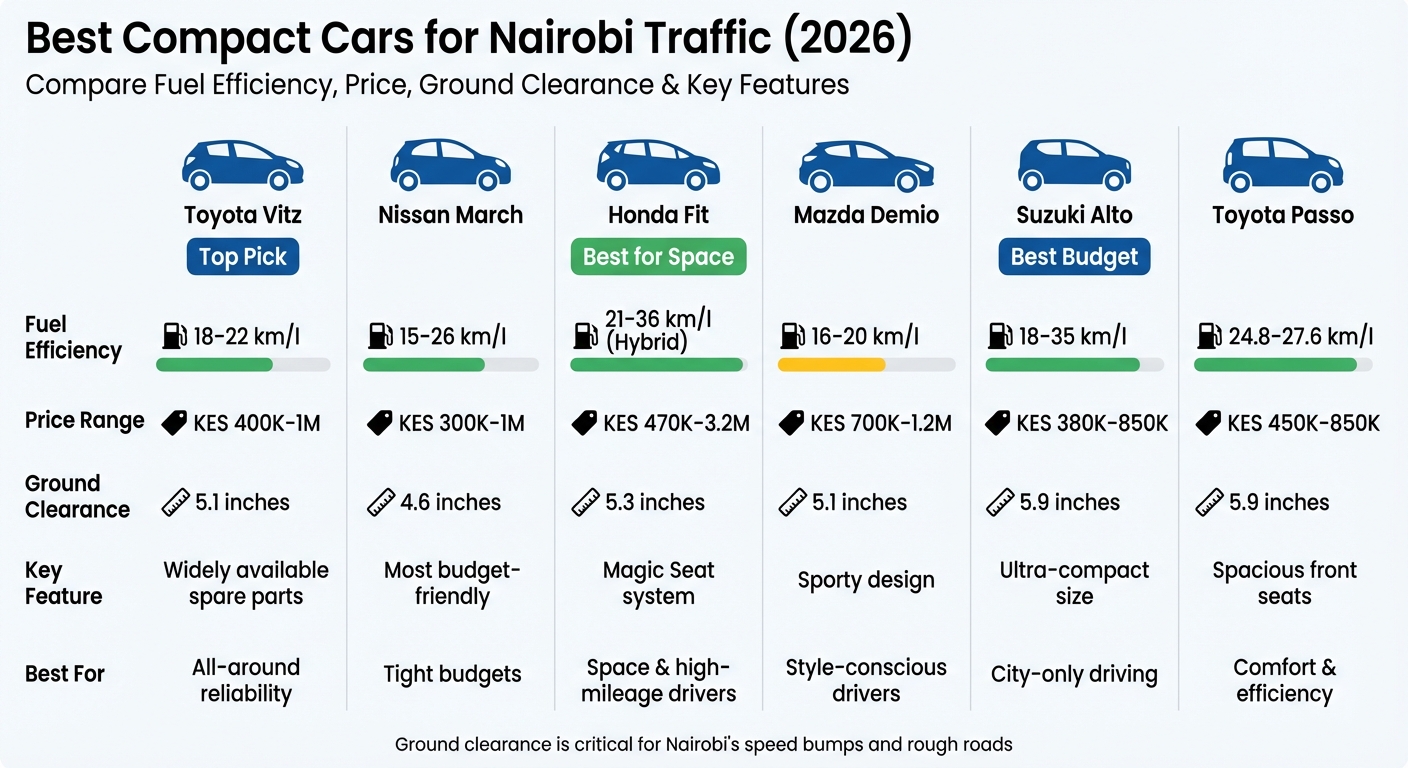
Best Compact Cars for Nairobi Traffic 2026: Fuel Efficiency, Price & Features Comparison
Prices of Cars in NAIROBI 🇰🇪 KENYA! 2025 models from JAPAN 🇯🇵
1. Toyota Vitz
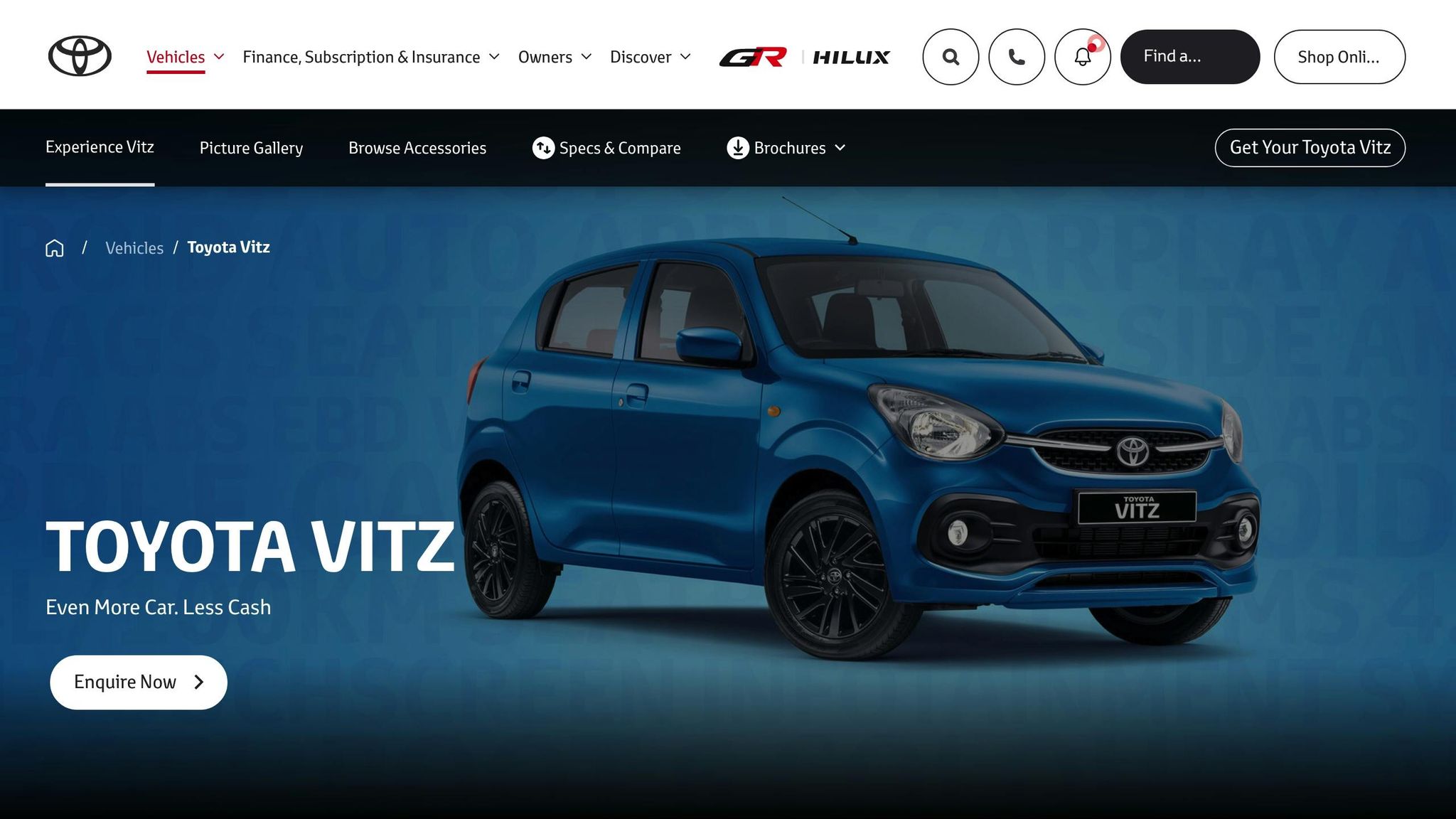
The Toyota Vitz, also known as the Yaris in some regions, has become a go-to choice for navigating Nairobi’s bustling streets. This subcompact hatchback combines fuel efficiency, easy handling, and low costs, making it ideal for urban driving.
Fuel Efficiency
The Vitz stands out for its impressive fuel economy, offering approximately 18–22 km/l in real-world driving conditions. For instance, the 1.0-liter model averages 20.3 km/l, while the 1.5-liter version achieves about 20.9 km/l. This level of efficiency translates to noticeable savings at the pump – especially important when fuel prices are unpredictable.
Maneuverability
With its compact size and responsive steering, the Vitz is perfectly suited for navigating Nairobi’s tight roundabouts and narrow lanes. Weighing less than 1,000 kg, it’s lightweight enough to make handling a breeze. However, its 5.1-inch ground clearance might require extra care over speed bumps.
Affordability
The Toyota Vitz also shines when it comes to affordability. Used models typically range from KES 400,000 to KES 1,000,000. For reference, a 2012 model costs around KES 630,000, while a 2018 version is priced closer to KES 990,000. Maintenance is budget-friendly too, thanks to shared parts with models like the Ractis and Platz.
Reliability
Durability and readily available spare parts ensure the Vitz remains a reliable option for years to come. As Mate Tongola from The Standard puts it:
"Toyota Vitz is affordable and its spare parts are easy to access and maintain".
Its straightforward design also reduces the likelihood of costly repairs.
2. Nissan March
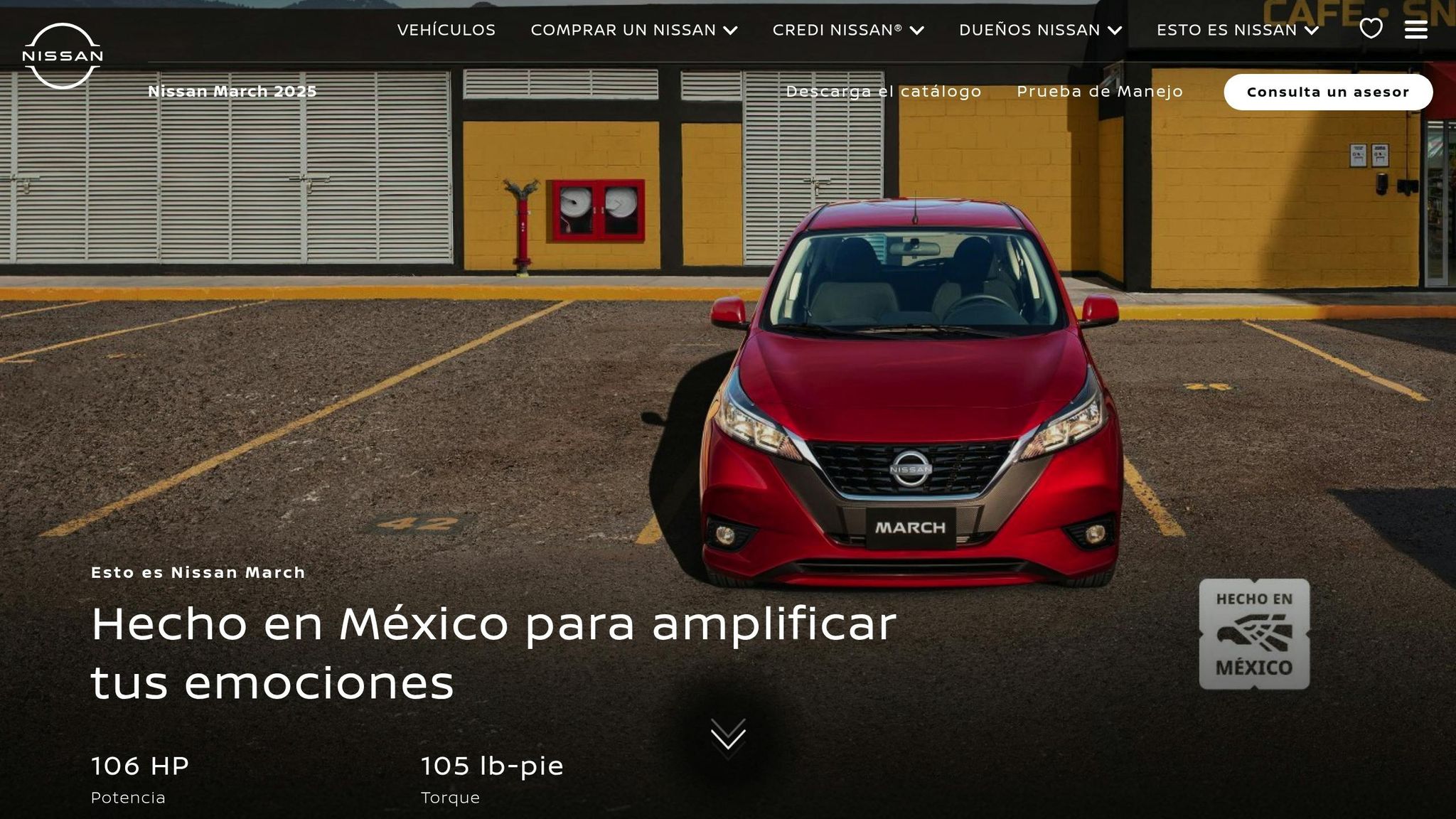
Right after the Toyota Vitz, the Nissan March steps in as another excellent choice for navigating Nairobi’s bustling streets. Known for its practicality, this compact car shines in fuel efficiency, affordability, and its ability to handle tight urban spaces with ease.
Fuel Efficiency
The Nissan March offers impressive mileage with its 1.2-liter petrol and 1.5-liter diesel engines, delivering between 15 km/L and 26 km/L. With a 41-liter fuel tank, you’ll spend less time at the pump, making it a budget-friendly option for daily commutes.
Maneuverability
Thanks to its tight turning radius and electric power-assisted steering, the March is easy to handle, even in Nairobi’s crowded streets. However, its 4.6-inch ground clearance means you’ll need to be careful around speed bumps and uneven roads.
Affordability
When it comes to cost, the Nissan March is a wallet-friendly choice. Used models typically range from KES 300,000 to KES 1,000,000. For example, a 2012 model averages around KES 448,000, while a 2015 version comes in at approximately KES 481,600. Maintenance is also relatively inexpensive, adding to its appeal.
Reliability
The Nissan March has built a strong reputation for being dependable. As Topcar Kenya puts it:
"The Nissan March is one of the most sought mini cars in the Kenyans market due to its great fuel efficiency, affordable price and reliability".
Its well-engineered engine and CVT transmission further cement its standing as a reliable city car.
3. Honda Fit
The Honda Fit stands out as a top choice for Nairobi’s urban drivers, thanks to its impressive fuel efficiency, practical design, and affordability. Its compact build and thoughtful features make it a favorite for navigating the city’s challenges.
Fuel Efficiency
When it comes to fuel economy, the Honda Fit delivers exceptional performance across its engine options. The 1.5-liter Hybrid model achieves an impressive 30.2 km/l, with some reports suggesting it can go up to 36 km/l. Standard petrol models also perform well, offering between 21 km/l and 26 km/l. For high-mileage drivers, such as Uber or Bolt operators, choosing the Hybrid model could mean saving up to KSh 15,000 per month on fuel compared to standard petrol versions. This level of efficiency is a game-changer for those spending long hours on the road.
Maneuverability
Navigating Nairobi’s congested streets is a breeze with the Honda Fit. Its light, responsive steering and compact design make it easy to weave through traffic and park in tight spaces. As Topcar Kenya puts it:
"Urban dwellers will find it ideal as a daily driver owing to its compact size that allows it to maneuver in traffic."
However, the 5.3-inch ground clearance may pose a challenge when tackling the city’s infamous speed bumps and potholes, so some caution is needed.
Affordability
The Honda Fit’s pricing makes it an attractive option for city dwellers. Used 2017+ models are priced between KSh 1.2 million and KSh 2.5 million, while Hybrid versions range from KSh 2.2 million to KSh 3.2 million. For those on a tighter budget, older models, such as a 2007 version, can be found for as low as KSh 470,000. The Fit also retains about 65% of its value after three years, outperforming many competitors that drop to 50%. Maintenance is affordable, with spare parts readily available and priced similarly to those of the Toyota Vitz.
Reliability
Keeping up with regular transmission servicing is key to maintaining the Honda Fit’s reliability. One standout feature is its "Magic Seat" configuration, which provides up to 1,200 liters of cargo space, far surpassing most other cars in its class. Magari Deals highlights the Hybrid model’s cost-effectiveness:
"The Hybrid model pays for itself in 2 years through fuel savings!"
For Nairobi commuters, the Fit’s dependability means fewer interruptions during daily traffic snarls. Combined with its long-term savings and practical features, the Honda Fit proves to be a smart choice for urban drivers looking for a reliable and economical vehicle.
4. Mazda Demio

The Mazda Demio adds a touch of sportiness to Nairobi’s compact car market, blending sleek design with practical features. This subcompact even snagged the 2014–2015 Car of the Year Japan award. Let’s break down why it’s a solid choice for urban driving, focusing on its fuel efficiency, maneuverability, affordability, and reliability.
Fuel Efficiency
Navigating Nairobi’s traffic can be a fuel-draining experience, but the Demio is built to handle it. With an official fuel consumption of 21 km/l – and real-world figures of around 16–20 km/l – it’s efficient enough for daily commutes. Plus, its "i-Stop" technology helps save fuel by shutting off the engine during stops, which is a lifesaver during endless rush hour jams. Its 1,300cc petrol engine, delivering 90 horsepower, works with a 6-speed transmission, striking a good balance between power and fuel economy. While it doesn’t quite match the fuel efficiency of hybrid options like the Toyota Aqua, it’s still a strong contender among traditional petrol cars.
Maneuverability
The Demio’s compact size and lightweight build (weighing just over a ton) make it a breeze to drive through Nairobi’s crowded streets. Its sharp handling and responsive steering make dodging traffic and squeezing into tight parking spots – like those in the CBD – a much easier task. On top of that, the car’s "KODO-Soul of Motion" design gives it a sporty, modern vibe, making it stand out from the more generic-looking competition.
Affordability
For city commuters, the Mazda Demio offers a reasonably priced option, with used models ranging from KSh 700,000 to KSh 1,200,000. It’s ranked as the second most affordable car in Kenya for 2025, factoring in both purchase and maintenance costs. While its upkeep isn’t as cheap as a Toyota, it’s still manageable, especially considering the features it offers. Another bonus? The Demio holds its value well, so you’re likely to get a good resale price down the line.
Reliability
With proper care and regular servicing, the Demio is built to last, even when faced with Nairobi’s demanding traffic conditions. Its lightweight frame means less wear and tear on mechanical components, and spare parts are relatively easy to find locally. However, its compact interior might feel a bit snug compared to competitors like the Honda Fit. This makes it a better choice for individuals or small families who prioritize driving enjoyment over cargo space.
sbb-itb-e5ed0ed
5. Suzuki Alto

The Suzuki Alto stands out as a practical and budget-friendly choice for Nairobi’s bustling city life. Often hailed as Kenya’s most economical city car, it’s a popular pick for cost-conscious commuters and taxi-hailing drivers using services like Uber and Bolt. With its ultra-compact design and a tiny 650cc engine, the Alto is perfect for weaving through Nairobi’s congested streets. However, it’s worth noting that this car is designed strictly for city use and isn’t ideal for long highway drives.
Fuel Efficiency
When it comes to fuel economy, the Alto is hard to beat. Testing on Nairobi’s roads shows the 650cc model delivering about 18 km/l in city traffic and 22 km/l on highways. For those looking for even better mileage, the ECO-L variant offers an impressive 35.0 km/l. Thanks to its Variable Valve Timing (VVT) technology, the Alto maximizes combustion efficiency, making it well-suited for stop-and-go traffic in Nairobi. Over three years, the 650cc model can save drivers around KSh 72,000 in fuel costs compared to a Toyota Vitz. This exceptional fuel performance, combined with its compact design, makes it a go-to option for navigating Nairobi’s crowded streets.
Maneuverability
The Alto’s small size is a big advantage in the city. Measuring just 3.5 meters in length – about 15.7 inches shorter than a Toyota Vitz – it’s perfect for squeezing into tight parking spots in Nairobi. Its narrow build also makes it a breeze to navigate through heavy traffic and crowded areas like the CBD. However, its lightweight frame does come with drawbacks. At higher speeds, the car feels less stable, which could increase the risk of rolling on highways. Additionally, with a ground clearance of 150 mm (5.9 inches), it’s prone to scraping over speed bumps unless the suspension is modified, as the recommended clearance for Kenyan roads is 165 mm.
Affordability
One of the Alto’s biggest selling points is its affordability. Used models from 2015–2017 start at around KSh 380,000, while 650cc models range between KSh 450,000 and KSh 650,000. Fresh imports from 2018–2020 are priced between KSh 690,000 and KSh 850,000. Beyond the initial cost, the Alto’s three-year total ownership expense is approximately KSh 589,000 – KSh 214,000 less than the Toyota Vitz. Maintenance costs are also significantly lower, with service expenses estimated to be about 60% less than those for a Toyota. Spare parts are easy to find in Nairobi’s Industrial Area and along Kirinyaga Road. The Alto also holds its value well, retaining about 65% of its worth after three years, which makes selling it relatively easy.
Reliability
The Alto’s simple engine design ensures dependable performance for city driving, provided it’s well-maintained. Minor services are needed every 5,000 km, while major services are recommended every 10,000 km.
"Its small engine ensures that the car does not hurt your pocket when it comes to fuel. Its maintenance costs are also low." – Mate Tongola, The Standard
That said, the Alto is best suited for short city trips. Pushing it on long journeys can lead to overheating issues. Taller passengers might also find the legroom a bit cramped. If you’re considering a used Alto, it’s wise to verify the mileage through NTSA, as odometer tampering affects an estimated 40% of used models.
6. Toyota Passo
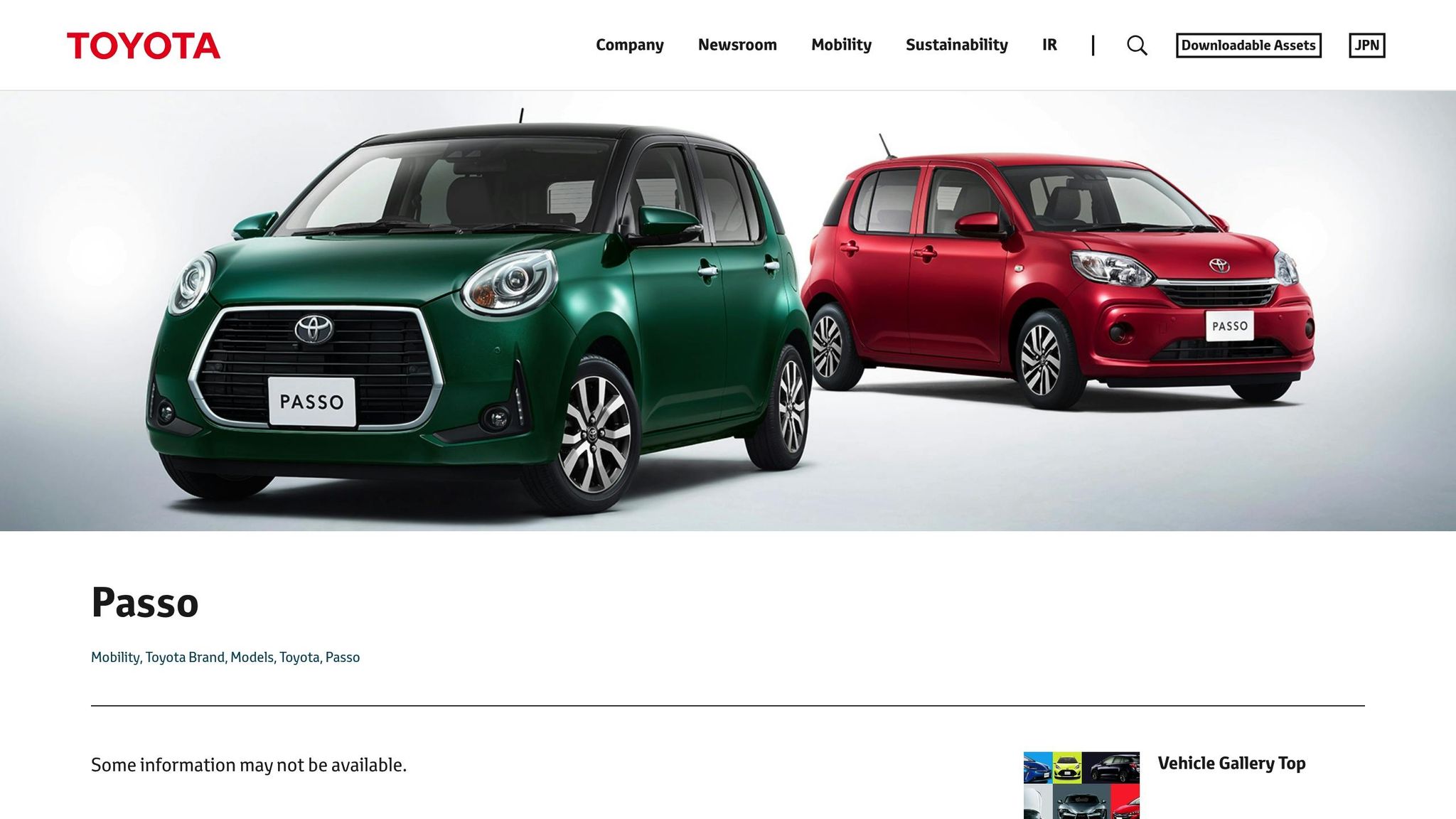
In Nairobi’s traffic-heavy streets, having a car that’s easy to maneuver and fuel-efficient is a game-changer. The Toyota Passo delivers on both fronts, making it a practical and affordable choice for urban drivers. Known for its spacious front seating – often likened to a "sofa on wheels" – this compact hatchback is powered by Toyota’s reliable 1.0L 1KR-FE engine. With spare parts readily available along Kirinyaga Road, owning and maintaining a Passo is hassle-free for many Nairobians. Its compact size ensures easy handling in tight spaces, while the slightly taller design offers extra headroom for passengers, making it a smart pick for city life.
Fuel Efficiency
The 2021 Toyota Passo is a standout when it comes to fuel economy, averaging 24.8 km/l, and under optimal conditions, reaching up to 27.6 km/l, as claimed by the manufacturer. The "Eco Idle" system is a clever feature that shuts off the engine at stops, like traffic lights, and restarts it when you release the brake, saving fuel during those frequent pauses. The car’s 1.0L 3-cylinder engine produces 68 horsepower and 92 Nm of torque, paired with a CVT (Continuously Variable Transmission) to maximize efficiency.
Maneuverability
With a turning radius of just 4.7 meters, the Passo is perfect for navigating narrow estate roads and making tight U-turns. The slightly elevated seating position boosts driver visibility, a big plus in Nairobi’s congested streets. While its Electronic Power Steering can feel a bit less responsive at lower speeds, newer models have addressed this issue. The car’s ground clearance of about 5.9–6.0 inches (150 mm) allows it to handle most speed bumps with ease, as long as they’re approached carefully.
Affordability
The Passo is a budget-friendly option for many Nairobi drivers. Used models typically range between KSh 550,000 and KSh 850,000, while older 2012 versions can be found for as low as KSh 450,000 to KSh 650,000. If you’re considering importing one, you could save up to KSh 500,000 compared to local showroom prices. Maintenance costs are manageable, too, thanks to its shared mechanical components with other Toyota models, which makes servicing straightforward and affordable.
Reliability
Toyota’s reputation for reliability shines through with the Passo, making it a dependable choice for city commuting. The 1KR-FE engine, also used in the Vitz, ensures mechanics are familiar with repairs, and spare parts are easy to come by. However, regular CVT fluid changes are crucial to avoid common transmission issues. For those eyeing newer models (2016 and later), the "Smart Assist III" collision avoidance system is a noteworthy feature. It detects pedestrians and obstacles, adding an extra layer of safety in Nairobi’s busy traffic. Weighing around 910 kg, the Passo’s lightweight build contributes to its excellent fuel efficiency, though its acceleration is modest, taking about 14.1–15 seconds to hit 100 km/h.
"The Passo still stands out owing to its harmonious blend of fuel efficiency and practicality." – TopCar Review
Pros and Cons
When it comes to navigating Nairobi’s traffic, each car model brings its own set of advantages and drawbacks. The Toyota Vitz stands out with its strong resale value and easy availability of spare parts, though it’s a common sight on Nairobi roads, which might not appeal to those looking for something less ubiquitous. The Nissan March is the most affordable option with a starting price of $2,300 and boasts solid fuel efficiency. However, its interior materials feel basic compared to some competitors. The Honda Fit offers a spacious cabin and the clever Magic Seat system for versatile storage, but it comes with a higher price tag ranging from $3,840 to $8,070.
The Mazda Demio delivers a sportier driving experience thanks to its lightweight design (weighing under 1,000 kg) and responsive steering, but its fuel efficiency of 14 km/l lags behind some rivals. On the other hand, the Suzuki Alto excels in fuel economy, achieving 22–25 km/l (52–59 mpg), and its ultra-compact size makes it perfect for navigating Nairobi’s congested streets. To better understand these differences, here’s a comparison of key metrics:
| Car Model | Fuel Efficiency (mpg) | Turn Radius (ft) | Price Range (USD) | Reliability Rating |
|---|---|---|---|---|
| Toyota Vitz | 42 – 62 | 15.4 – 16.7 | $3,070 – $7,690 | Very High |
| Nissan March | 35 – 47 | 14.8 | $2,300 – $6,920 | Moderate |
| Honda Fit | 45 – 85 (Hybrid) | 16.1 | $3,840 – $8,070 | High |
| Mazda Demio | 40 – 59 | 15.4 | $3,840 – $7,690 | High |
| Suzuki Alto | 52 – 59 | ~14.5 | $3,840 – $5,380 | High |
| Toyota Passo | 58 – 65 | 15.4 | $5,000 – $7,300 | Very High |
Beyond these specs, long-term costs and reliability are critical factors. The Suzuki Alto and Nissan March shine with their tight turning radii of approximately 14.5 feet and 14.8 feet, making them ideal for U-turns and navigating narrow streets. Meanwhile, the Honda Fit and Toyota Vitz offer better long-term value through impressive fuel efficiency and dependable resale prices. Annual insurance for these vehicles typically ranges between $230 and $385, adding another layer to consider when evaluating overall affordability.
Conclusion
After evaluating these six compact cars, the Toyota Vitz stands out as the best overall choice for tackling Nairobi’s urban challenges. Known for its reliability, strong resale value, and the easy availability of spare parts locally, it strikes a great balance between affordability and dependability. If interior space and flexibility are your priorities, the Honda Fit is worth the extra cost. Its Magic Seats and spacious cabin make it a great option for families or anyone needing to transport bulky items. For those on a tighter budget, the Suzuki Alto offers a reliable and economical alternative. In a city where time and convenience matter, picking the right compact car is essential.
Before making a purchase, there are a few crucial steps to follow. First, verify the car’s logbook using the NTSA TIMS portal to ensure legal ownership. Next, have a trusted mechanic inspect the vehicle to confirm the mileage and identify potential issues. These inspections, which typically cost between $13 and $21, can save you from expensive repairs down the road. For those considering the Honda Fit Hybrid, it’s important to check the hybrid battery’s condition, as replacements can be pricey.
Ground clearance is another key consideration for navigating Nairobi’s often rough roads. Many imported Japanese cars sit low to the ground, so you may need to budget for suspension spacers or heavy-duty shocks to meet the recommended clearance of 165 mm (6.5 inches). During test drives, pay attention to the CVT transmission for any unusual sounds, as they might indicate costly repairs. Any mechanical or cosmetic issues you identify can also give you leverage in price negotiations.
Finally, don’t forget to factor in all related expenses when planning your budget. Beyond the purchase price, you’ll need to account for comprehensive insurance (about 4% of the car’s value annually), registration fees, and initial maintenance costs. To keep maintenance affordable, source spare parts from reputable local dealers. With thorough verification and inspection, you can secure a compact car that will handle Nairobi’s traffic and roads reliably for years to come.
FAQs
What factors should I consider when choosing a compact car for Nairobi traffic?
When you’re choosing a compact car for navigating Nairobi’s bustling streets, fuel efficiency should be at the top of your list. Not only does it help you save on gas, but it also minimizes your carbon footprint. Models like the Toyota Vitz (around 42–52 mpg) and Daihatsu Mira e:S (about 54–66 mpg) are excellent choices for daily city commutes.
Another critical factor is maneuverability. Compact hatchbacks such as the Honda Fit and Mazda Demio are designed to handle tight spaces, crowded roads, and narrow parking spots with ease. Despite their small size, these cars offer surprisingly spacious interiors, making them perfect for urban driving.
Lastly, think about affordability and maintenance. Cars like the Toyota Vitz, Nissan Note, and Toyota Passo are often priced under $7,500, making them budget-friendly options. Plus, their spare parts are easy to find, which helps keep maintenance costs low. Opt for reliable models with essential safety features to ensure a smooth and economical ride through Nairobi’s traffic.
Why is ground clearance important for driving in Nairobi’s traffic?
Ground clearance – the space between a vehicle’s undercarriage and the road – is a key factor when driving on Nairobi’s uneven streets. A higher clearance can help your car navigate potholes, speed bumps, and rough patches with ease, minimizing suspension damage and cutting down on repair expenses.
For smaller cars like the Toyota Vitz, Honda Fit, or Nissan March, a ground clearance of 6 to 7 inches (150–180 mm) strikes the perfect balance. It’s high enough to tackle bumpy roads while still offering stability, good fuel economy, and easy handling for city traffic. Opting for a car with this setup can make your daily commute through Nairobi smoother and more budget-friendly.
Are hybrid cars a good choice for driving in Nairobi traffic?
Hybrid cars are a smart choice for navigating Nairobi’s notoriously crowded streets, even though they come with a higher upfront price tag. Take the Toyota Aqua, for instance. Priced between $6,700 and $10,000 (1–1.5 million KES), this hybrid delivers an impressive fuel efficiency of 58–70 mpg (25–30 km/L). That’s a noticeable improvement compared to the 42–52 mpg (18–22 km/L) offered by non-hybrid compact cars. Considering Nairobi’s gas prices, which average $1.18 per liter (176.58 KES) as of March 2025, the fuel savings can add up quickly – particularly in heavy traffic.
Beyond fuel efficiency, hybrids often come with lower maintenance costs. Their engines experience less wear and tear, and features like automatic idle-stop help conserve fuel and cut emissions during those frequent stops city drivers face. For those navigating Nairobi’s constant stop-and-go traffic, these perks mean actual savings, a quieter ride, and a more comfortable driving experience. If the initial expense fits your budget, hybrids are a practical long-term solution for urban commutes.
Related Blog Posts
- Top Fuel-Efficient Cars for Daily Commutes in Nairobi
- Best used cars to buy in Kenya
- Car prices in Nairobi 2025
- Most Fuel-Efficient Cars in Kenya for Budget-Conscious Drivers