Looking for an affordable car in Kenya? Here’s what you need to know:
- Used Cars Starting as Low as KSh 300,000: Models like the Nissan March and Suzuki Alto are budget-friendly options.
- Key Factors to Consider: Focus on purchase price, fuel efficiency, maintenance costs, and availability of spare parts.
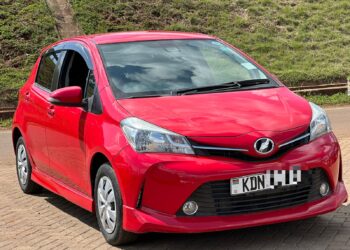
- Popular Models: Toyota Vitz, Nissan March, Mazda Demio, and Toyota Passo are reliable and cost-effective choices.
- Price Ranges:
- Nissan March: KSh 270,000–350,000
- Toyota Passo: KSh 370,000–450,000
- Toyota Vitz: KSh 530,000–580,000
- New vs. Used Cars: New cars offer warranties but cost more (starting at KSh 2M). Used cars are cheaper and hold stable resale value but may require more maintenance.
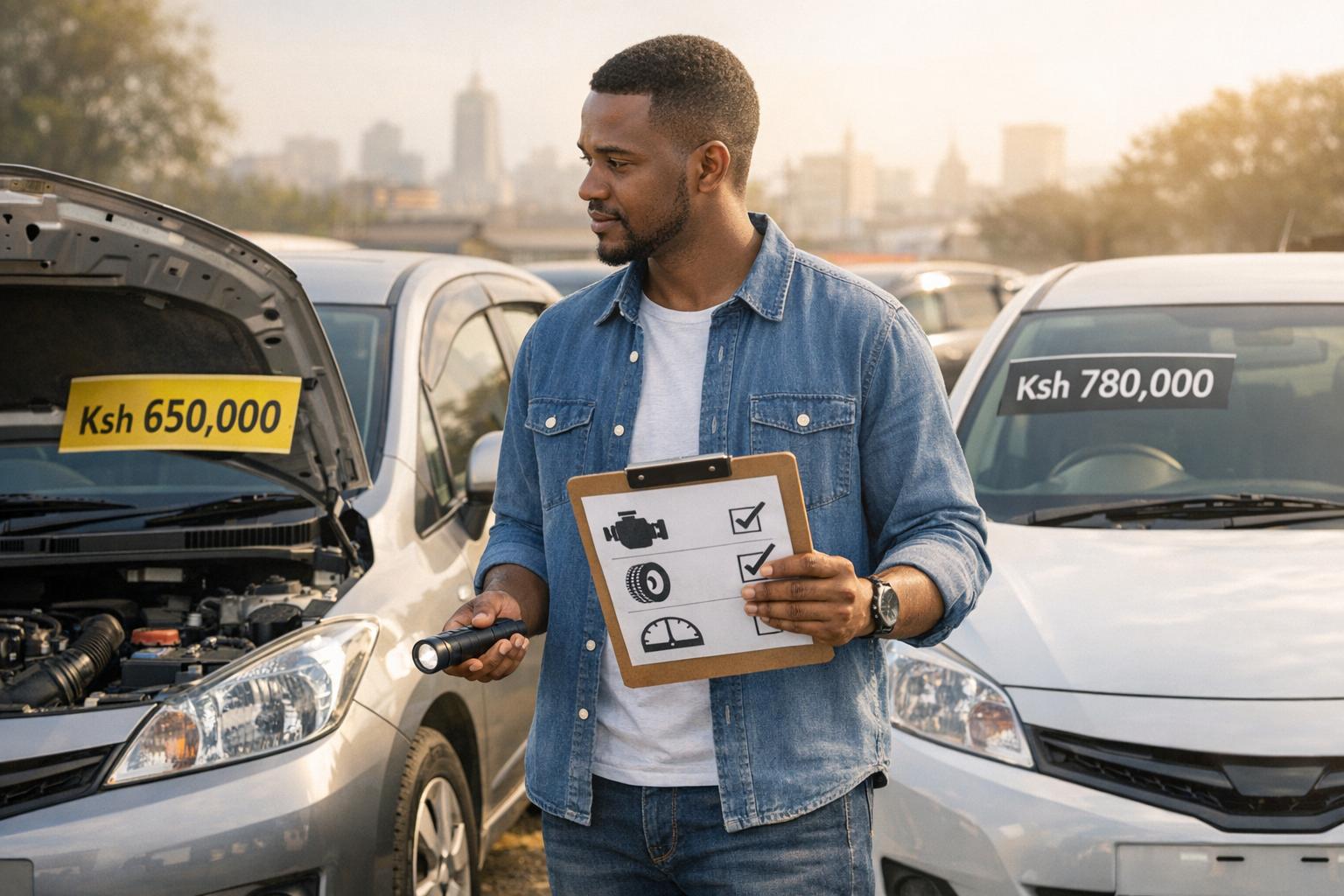
Quick Tip: Always inspect the car, verify its history with NTSA, and consider a pre-purchase inspection by a trusted mechanic. Whether you’re buying locally or importing, reliability and total ownership costs should guide your decision.
Best First Cars in Kenya Under KES 500K 🔥 Top 15 Reliable Daily Drivers for Beginners
sbb-itb-e5ed0ed
Most Affordable Car Models in Kenya
Kenya’s used car market is full of reliable and budget-friendly options. While many cars in this range hover around the KSh 500,000 mark, the actual price depends on factors like the model, year, and condition. Here’s a closer look at some popular choices to help you decide.
Toyota Vitz
The 2013 Toyota Vitz is priced between KSh 530,000 and KSh 580,000 (about $4,080 to $4,465), with monthly financing estimates of KSh 38,706. Known for its excellent fuel efficiency and compact size, it’s a great pick for city driving and retains its value well in the resale market.
Nissan March
If you’re looking for something smaller and more affordable, the 2012 Nissan March comes in at around KSh 270,000 to KSh 350,000 (roughly $2,080 to $2,695), with monthly payments estimated at KSh 21,276. Its compact design and efficient engine make it a practical choice for navigating busy urban streets.
Suzuki Alto
The Suzuki Alto is a no-frills option with a focus on simplicity and fuel economy. Its low running costs make it an appealing choice for anyone prioritizing affordability over extra features.
Mazda Demio
For those seeking a balance between comfort and efficiency, the Mazda Demio is a solid option. Typically priced under KSh 500,000, it’s suitable for both city commutes and longer trips.
Toyota Passo
The 2012 Toyota Passo is priced between KSh 370,000 and KSh 450,000 (about $2,850 to $3,465), with monthly financing around KSh 27,021. Meanwhile, the 2014 model comes in at KSh 580,000 to KSh 640,000 (roughly $4,465 to $4,930). Its spacious interior offers extra comfort, all while maintaining great fuel efficiency.
Price Comparison Table
Cheapest Cars in Kenya: Price Comparison and Key Features Guide
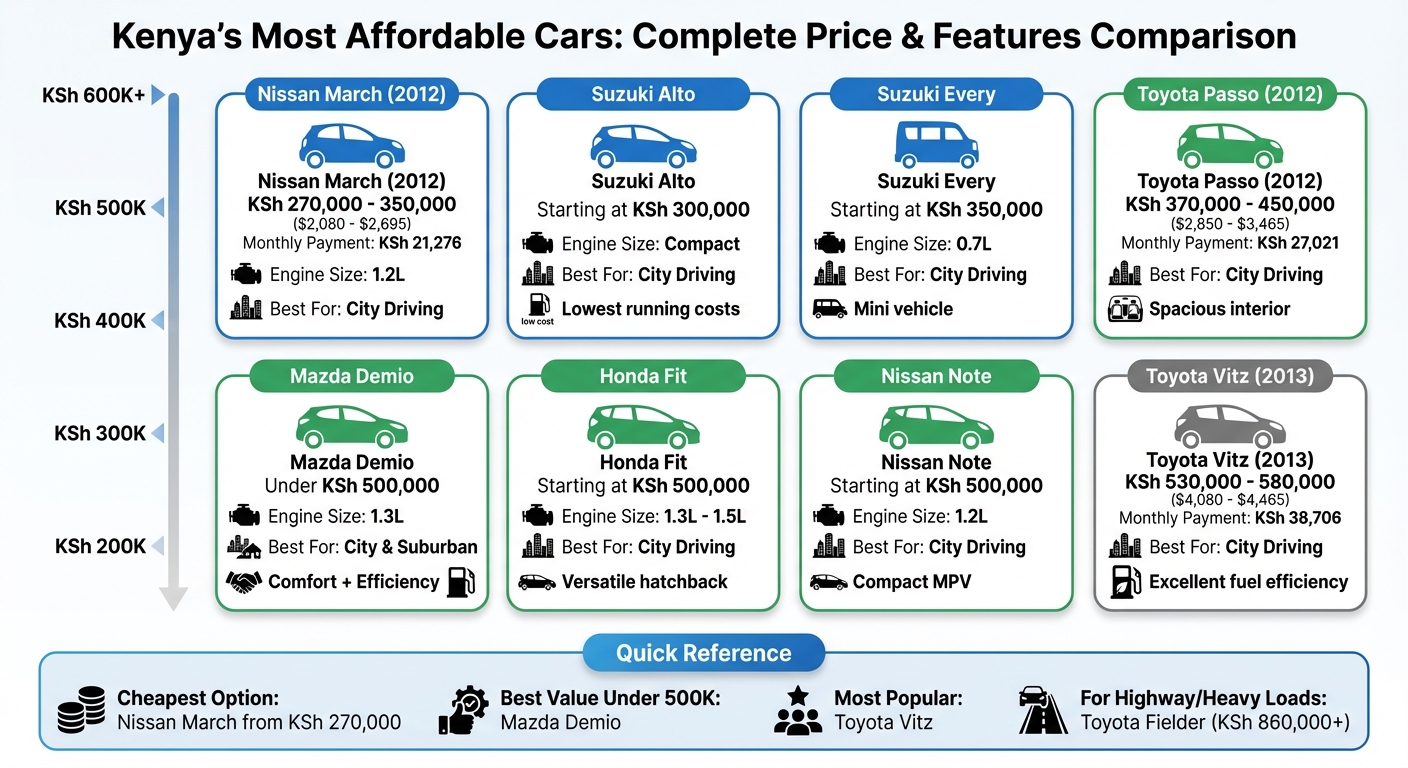
Here’s a quick look at some of Kenya’s most budget-friendly cars, highlighting their starting prices, engine sizes, and ideal driving uses.
| Model | Engine Size | Starting Price (KSh) | Best Suited For |
|---|---|---|---|
| Nissan March | 1.2L | 270,000 | City Driving |
| Suzuki Every | 0.7L | 350,000 | City Driving |
| Toyota Passo | 1.0L | 370,000 | City Driving |
| Toyota Vitz | 1.0L | 530,000 | City Driving |
| Mazda Demio | 1.3L | 500,000 | City & Suburban |
| Honda Fit | 1.3L – 1.5L | 500,000 | City Driving |
| Nissan Note | 1.2L | 500,000 | City Driving |
If you’re planning highway drives or need to transport heavier loads, you might want to explore vehicles with bigger engines, like the Toyota Fielder, which starts at KSh 860,000. On the other hand, for cost-effective city commuting, the models listed above offer some of the lowest ownership costs in Kenya.
This table serves as a helpful starting point for comparing both new and used options in the market, giving you a foundation to weigh the pros and cons of each vehicle type.
New vs. Used Cars: What to Buy
When deciding between a new or used car in Kenya, it’s all about weighing upfront costs against long-term value. New cars typically start at around KSh 2,000,000 to KSh 3,000,000, while reliable used models, like the Suzuki Alto or Toyota Vitz, can cost as little as KSh 300,000 – or even KSh 200,000 for older, high-mileage options.
Benefits of Buying New Cars
New cars come with manufacturer warranties, which cover mechanical issues and provide peace of mind. They also feature the most up-to-date safety systems and technology. However, the downside is depreciation – new vehicles lose a big chunk of their value within the first few years of ownership.
Benefits of Buying Used Cars
Used cars have already depreciated, meaning their resale value tends to be more stable. They also come with a much lower upfront cost, and you’ll find a wide range of prices depending on the model and condition. Many reputable dealerships in Kenya offer warranties for certified used cars, but private sellers rarely do. On the flip side, older vehicles with higher mileage may need more frequent repairs, so factor that into your decision.
What to Consider When Deciding
When choosing between new and used, think about the total cost of ownership. This includes insurance premiums, transfer fees, initial servicing, and fuel efficiency – especially important given Kenya’s fluctuating fuel prices. New cars usually come with higher insurance costs because premiums are based on the car’s market value, whereas used cars typically have lower premiums.
Before buying, always verify the car’s history by checking the VIN with local authorities to ensure it’s not stolen. Whether you’re buying from a private seller or a dealership, it’s smart to hire a trusted mechanic for a pre-purchase inspection. If you’re looking for a compromise, consider fresh Japanese imports. These vehicles often have lower mileage and are in better mechanical condition than locally used cars, yet they’re more affordable than brand-new models.
How to Buy Affordable Cars in Kenya
Where to Find Trusted Sellers
Finding a reliable seller is a key step when you’re looking for budget-friendly cars. Dealerships often provide certified used cars with warranties, but their prices are generally higher than private sellers. Online platforms are growing in popularity, and AUTO24.co.ke, a subsidiary of Africar Group Pty Ltd, is preparing to launch in Kenya. While waiting for their launch, you can follow their LinkedIn and YouTube channels for updates on certified listings. The parent company brings solid experience from the region, which could be beneficial for buyers. For immediate options, explore automotive forums and local car markets, but always check reviews and testimonials to ensure the seller is trustworthy. Once you’ve found a reliable seller, you’ll need to thoroughly inspect the car before making a decision.
How to Inspect a Car Before Buying
Begin your inspection by checking the exterior for signs of rust, dents, or uneven paint, which could indicate past accidents or poor repairs. Inside the car, test all controls, including power windows, air conditioning, and infotainment systems, and check the upholstery for wear and tear. Under the hood, look for fluid leaks while the engine is running and listen for any unusual sounds. Don’t forget to inspect the tire tread and suspension condition. A test drive is non-negotiable – observe how the car handles, brakes, accelerates, and reacts during turns. Additionally, verify the vehicle’s VIN with NTSA to confirm its legitimacy and mileage accuracy. If the car is a fresh import, ensure it has JEVIC certification and complies with KEBS standards. Lastly, hire a trusted mechanic for a pre-purchase inspection to uncover any hidden issues.
Price Negotiation and Financing
Once you’re satisfied with the car’s condition, focus on negotiating a fair price and exploring financing options. Start by researching market prices using online listings and forums. For example, look up typical prices for popular models like the Toyota Vitz or Suzuki Alto to strengthen your bargaining position. A professional appraisal can also provide technical data to support your offer. Be prepared to walk away if the seller’s price isn’t reasonable – this can sometimes lead to a better counteroffer.
When it comes to financing, compare bank loans, which often have competitive rates, with dealership financing, which may appear attractive but could include higher overall costs. Gather necessary documents like your national ID or passport and proof of income. Don’t forget to account for additional ownership costs, such as third-party insurance, NTSA transfer fees, initial servicing, fuel, and ongoing maintenance. Carefully review all loan terms to avoid hidden fees before signing any agreements.
Conclusion
Based on the tips and comparisons shared earlier, finding an affordable and dependable car is all about balancing cost, quality, and practicality.
You don’t have to compromise on quality to stick to your budget. There are plenty of cars available at different price points, so there’s something for everyone.
Keep in mind the total cost of ownership. This includes expenses like insurance, transfer fees, and any initial servicing. Whether you’re considering a low-mileage import or a locally used car that’s easier to inspect, always schedule an independent mechanical check before making a decision.
Stick with brands that have strong local support – such as Toyota, Nissan, or Honda – for easier access to spare parts and reasonably priced repairs. Double-check NTSA documents and ensure the logbook transfer is done officially to avoid any future hassles.
As noted in our review, the Kenyan market has over 1,700 verified listings across different platforms, giving you a wide pool to compare prices and conditions. Do your homework, focus on mechanical reliability over aesthetics, and you’ll be on your way to owning a reliable car that fits your budget.
FAQs
What’s the cheapest reliable car to buy in Kenya?
When it comes to finding affordable and dependable used cars in Kenya, brands like Toyota, Honda, and Nissan consistently stand out. These vehicles are well-known for their reliability, low maintenance costs, and the easy availability of spare parts. For buyers looking to balance cost with long-term value, these brands are often the top choices.
How do I check a car’s history on NTSA before paying?
To check a car’s history on NTSA, use the NTSA TIMS portal – Kenya’s official platform for verifying vehicle registration and ownership.
Here’s how you can do it:
- Log in to the NTSA TIMS portal with your credentials.
- Navigate to the vehicle registration section.
- Enter the vehicle registration number and click on “Search.”
This process helps confirm the vehicle’s ownership details, offering peace of mind and minimizing the chances of falling victim to fraud.
Should I buy a local used car or a fresh Japanese import?
Choosing between a local used car and a Japanese import really comes down to your priorities and budget. Local options, such as the Suzuki Alto or Toyota Vitz, tend to be more affordable and practical for everyday use. However, they often come with higher mileage. On the other hand, Japanese imports typically offer lower mileage and more up-to-date features, but they also bring extra expenses like import duties. If you’re looking for an economical and straightforward choice, a local car might be the way to go. But if newer features and lower mileage are your priorities, a Japanese import could be worth the additional cost.
Related Blog Posts
- Best used cars to buy in Kenya
- Car prices in Nairobi 2025
- Where to buy certified used cars in Kenya
- Car Prices in Kenya in 2025: Full Market Guide