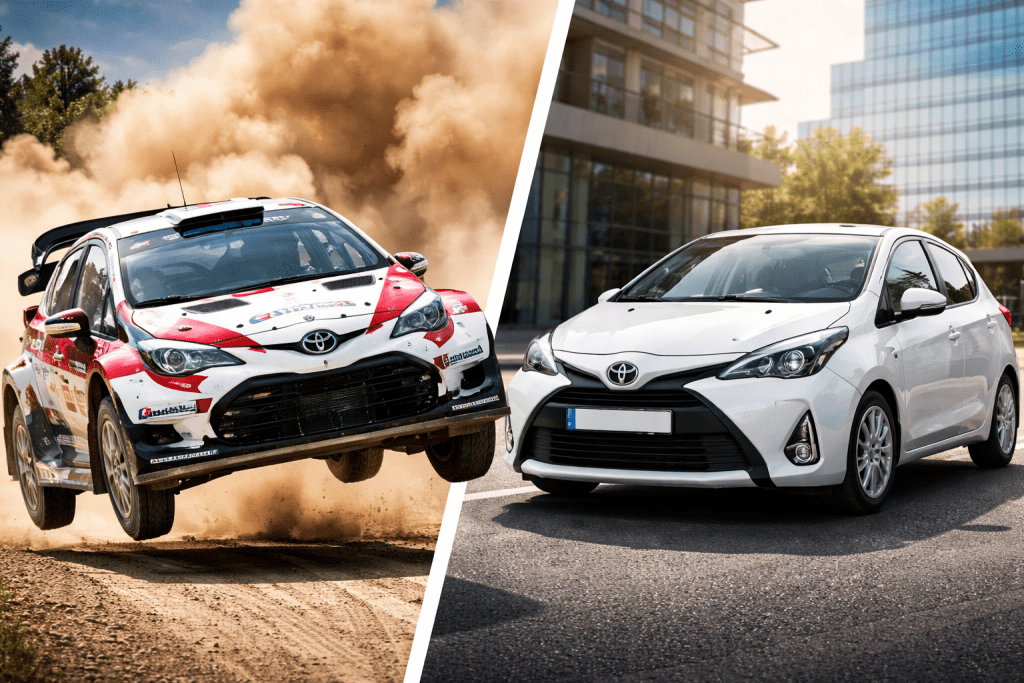
On Kenyan roads, your car is built to handle traffic, errands, and the occasional rough patch. But during the Safari Rally, cars face punishing terrain at extreme speeds, and they’re engineered for a completely different mission.
Even when a rally car looks like something you’d spot in a showroom, the reality underneath is closer to a high-performance machine than a regular vehicle. Here’s a clear, practical breakdown of how these two types of cars differ.
1. Purpose: Daily Transport vs Extreme Performance
A standard car is designed for convenience, fuel efficiency, and comfort. It needs to handle school runs, commutes, and long-distance travel with minimal stress.
A rally car is built for competition. Every component is optimized for speed, durability, and control under harsh conditions like gravel, mud, and unpredictable weather.
👉 For more insights into how cars are designed for different purposes, you can explore expert guides on automag.co.ke.
2. Body Structure: Flexible Comfort vs Reinforced Strength
Regular cars are built with comfort in mind. Manufacturers include insulation, soft materials, and flexible body structures to absorb vibrations.
Rally cars take the opposite approach. The body is heavily reinforced to improve rigidity and safety. A welded roll cage strengthens the entire structure, helping protect occupants during high-speed impacts or rollovers.
This level of reinforcement is why rally drivers can survive crashes that would severely damage a normal vehicle.
3. Suspension Systems: Smooth Driving vs Impact Absorption
In everyday driving, suspension systems are tuned to provide a smooth ride over bumps and uneven roads.
Rally cars use long-travel suspension systems designed to handle extreme impacts. Whether it’s landing after a jump or maintaining grip on loose surfaces, the suspension is engineered to keep the car stable and controllable.
For Kenyan drivers navigating rough roads, choosing a vehicle with strong suspension is essential. Platforms like auto24.co.ke offer options such as Toyota Land Cruisers and Subaru Foresters that are better suited for such conditions.
4. Engine Response: Gradual Power vs Instant Acceleration
In a normal car, acceleration is designed to be smooth and predictable. Turbocharged engines may have slight delays before delivering full power.
Rally cars eliminate this delay using advanced systems that maintain engine responsiveness at all times. This ensures immediate acceleration when exiting corners or navigating technical sections.
However, such systems require specialized engineering and are not suitable for everyday vehicles due to high wear and maintenance demands.
👉 Learn more about modern engine technologies and performance tuning on autoskenya.com.
5. Interior Setup: Comfort Features vs Functional Design
Your everyday car likely includes:
- Air conditioning
- Infotainment systems
- Comfortable seating
A rally car strips all of that away. The interior is minimal and focused purely on driving performance.
Drivers use racing seats, harnesses, and simplified controls. Everything unnecessary is removed to reduce weight and improve efficiency.
6. Cost and Engineering: Mass Production vs Specialized Build
Regular cars are mass-produced, making them more affordable and easier to maintain.
Rally cars are custom-built machines. Their high cost comes from specialized components, continuous testing, and the need to withstand extreme conditions.
This explains why rally cars can cost tens or even hundreds of millions of shillings.
What Kenyan Drivers Can Learn from Rally Cars
Even if you’re not competing, rally engineering offers useful lessons:
- Maintain your suspension regularly, especially on rough roads
- Avoid unsafe modifications that can damage your engine
- Prioritize safety features when buying a car
- Choose vehicles suited for your driving environment
For those exploring the future of driving, platforms like EV24.africa provide options for importing electric vehicles into Kenya, expanding choices beyond traditional fuel cars.
Conclusion
The difference between a rally car and a normal car goes far beyond appearance. One is built for everyday reliability, while the other is engineered to perform under extreme pressure.
Understanding these differences helps you make smarter decisions as a driver, whether you’re buying a car, maintaining one, or simply appreciating the machines that dominate events like the Safari Rally.