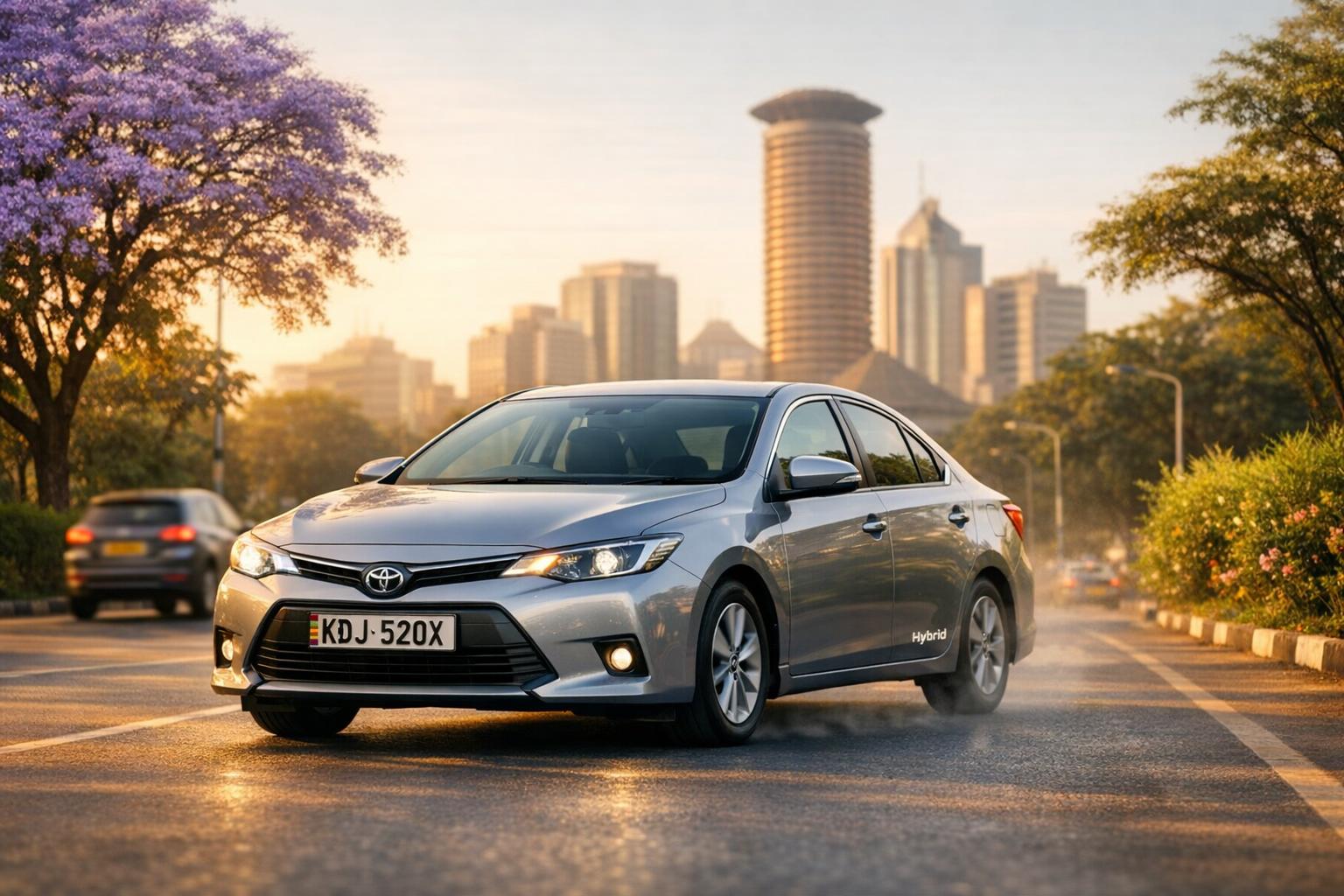
Hybrid cars are transforming the driving experience in Kenya, especially with fuel prices exceeding KES 200 per liter. Here’s why they’re a smart choice for urban and long-distance drivers:
- Save on Fuel Costs: Hybrids like the Toyota Aqua (25–30 km/l) use up to 50% less fuel than conventional cars, saving drivers up to KES 144,000 annually.
- Cleaner Air: These cars emit up to 50% fewer pollutants, reducing the impact of Nairobi’s traffic on air quality.
- Ideal for City Traffic: Features like electric-only mode, regenerative braking, and auto start-stop systems ensure efficiency in stop-and-go scenarios.
- Lower Maintenance: Hybrids require fewer repairs, with reduced wear on brake pads and longer-lasting engines.
- Government Support: Reduced import duties (10% excise vs. 20–35% for regular cars) make hybrids more affordable.
Hybrid vehicles combine cost savings, eco-friendliness, and practical features for Kenya’s congested roads. With growing infrastructure and policy backing, they’re shaping the future of mobility in the country.
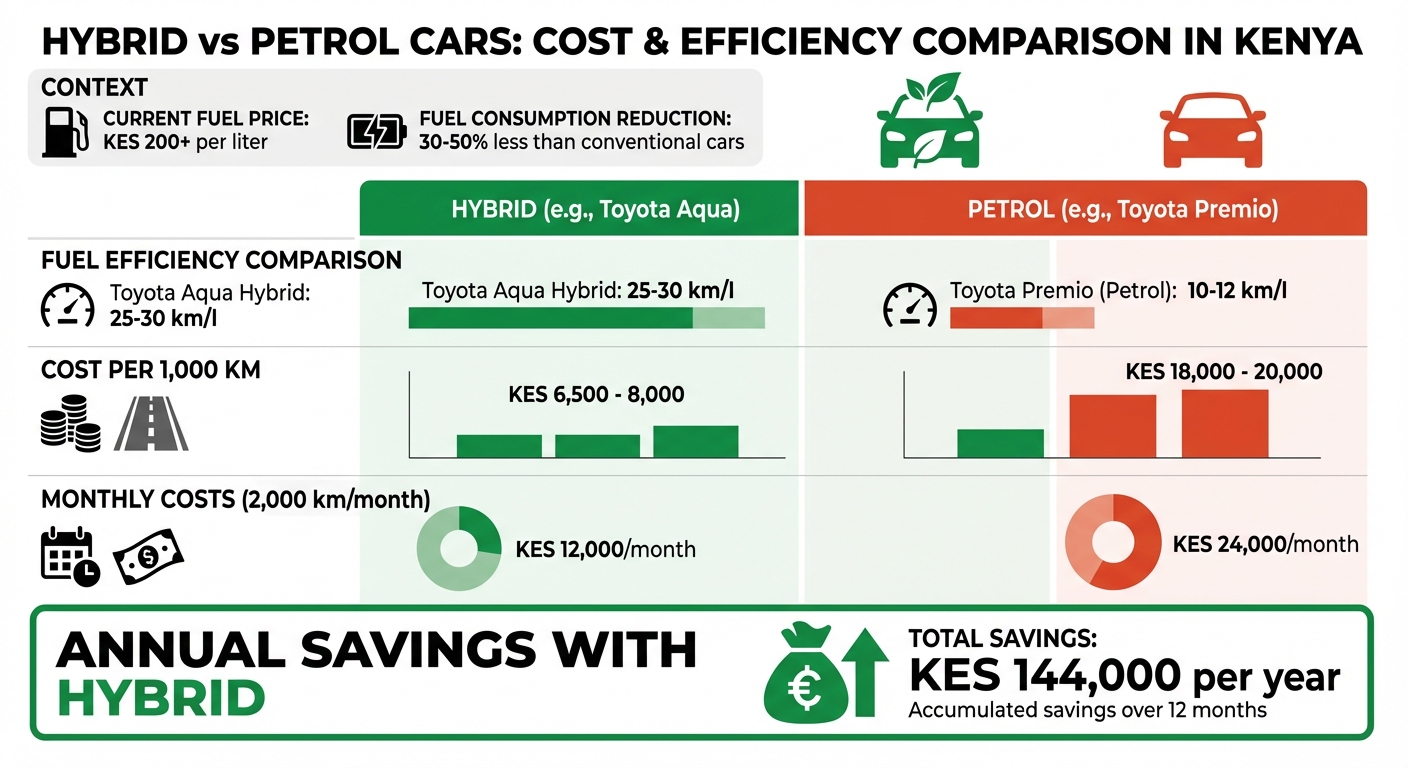
Hybrid vs Petrol Cars in Kenya: Cost Savings and Efficiency Comparison
Hybrid vs Non-Hybrid Cars in Kenya / Africa Review : Complete Guide for First Time Car Buyers
sbb-itb-e5ed0ed
1. Lower Fuel Costs
Hybrid vehicles are a game-changer for anyone looking to cut down on fuel expenses. With petrol prices in Kenya exceeding KES 200 per liter, every liter saved makes a difference. Hybrids can slash fuel consumption by 30%–50% compared to traditional petrol-powered cars.
Take the Toyota Aqua Hybrid, for example. It offers an impressive fuel efficiency of 25–30 km per liter, while a petrol-only Toyota Premio manages just 10–12 km per liter. Over a distance of 1,000 km, the Aqua’s fuel cost ranges from KES 6,500 to 8,000, whereas the Premio racks up a hefty KES 18,000 to 20,000.
Now, imagine a Nairobi commuter covering 2,000 km per month. With a hybrid, their monthly fuel expense would be around KES 12,000, compared to KES 24,000 for a petrol sedan. That’s a yearly saving of about KES 144,000. For those in ride-hailing services or frequent commuters, monthly savings can easily surpass KES 10,000.
Hybrids are especially efficient in city driving. In Nairobi’s notorious traffic jams, features like electric-only operation at low speeds and auto start-stop systems come into play. The start-stop system shuts off the engine when idling, while regenerative braking captures energy whenever you slow down. During acceleration, the electric motor takes some of the load off the petrol engine. All these features work together to maximize fuel efficiency, particularly in stop-and-go traffic.
2. Fewer Emissions and Cleaner Air
Hybrids aren’t just about saving fuel – they’re also a big step toward a healthier environment.
Take Nairobi, for example, where air pollution is a major issue. By combining electric and conventional engines, hybrid vehicles cut carbon emissions by 30% to 50% compared to traditional cars. This is especially beneficial in cities with heavy traffic, where hybrids can make the most of their design.
Picture the gridlock on Mombasa Road or Waiyaki Way. In these scenarios, hybrids shine. At low speeds, the electric motor takes over, running with zero tailpipe emissions. Add in the auto start-stop system, which shuts off the engine during idling, and you’ve got a big reduction in unnecessary CO₂ output.
For example, the Toyota Prius Hybrid uses 50% less fuel than a regular gasoline sedan. That means it also releases far fewer emissions, making it a cleaner option for cities like Nairobi, Mombasa, and Kisumu.
Hybrids don’t just cut down on air pollution – they also reduce noise pollution. When running on the electric motor alone, they’re almost completely silent. This creates a calmer, quieter atmosphere in bustling urban areas.
The numbers tell a promising story. During the 2022–2023 financial year, Kenya saw a 108% jump in electric and hybrid vehicle sales. These vehicles now make up 8.3% of the new car market. As more people switch to green mobility, hybrids are proving to be an essential part of the solution for cleaner, quieter cities in Kenya. Combined with their fuel efficiency, they’re an obvious choice for the country’s roads.
3. Better Performance in City Traffic
Getting through Nairobi’s notorious traffic jams on roads like Thika Road or Uhuru Highway can be a nightmare. This is where hybrid vehicles shine. In slow-moving traffic, hybrids often switch to electric-only mode, offering instant torque right from 0 rpm. During these stops and crawls, the gasoline engine shuts off, meaning no fuel is wasted while idling.
This smart efficiency doesn’t just save money – it also improves the overall driving experience. Interestingly, hybrids typically perform better in city driving than on highways. Their design is perfect for stop-and-go scenarios, making them ideal for urban commutes.
"If your daily commutes involve being stuck in traffic, then a hybrid vehicle will help you take advantage of the braking, start and stop instances."
– Shadrack, Author, Nseal.co.ke
Another bonus? Every time you brake, the regenerative braking system kicks in. This not only helps with smoother acceleration but also extends the life of your brake pads, ultimately cutting down on maintenance costs .
4. Lower Maintenance Costs
Hybrids aren’t just about saving on fuel and cutting emissions – they also come with lower long-term maintenance expenses. On average, hybrid owners spend 30% to 40% less on upkeep compared to those driving traditional petrol or diesel vehicles.
One reason for this is the use of electric deceleration, which reduces wear and tear on brake pads and rotors. For hybrids, replacing these parts typically costs around KES 10,000 to 15,000, while conventional cars often rack up bills closer to KES 15,000 to 20,000.
The internal combustion engine in hybrids also experiences less strain. Thanks to the electric motor handling low-speed driving and assisting with acceleration, these engines last longer. For example, while most petrol engines need oil changes every 5,000 km, many hybrid models – like the Toyota Prius – can stretch service intervals to 8,000 km or even 16,000 km.
Hybrids also prove to be incredibly durable. Back in 2011, Consumer Reports tested a 2001 Toyota Prius with over 320,000 km on the odometer. Remarkably, the car performed almost like new. The hybrid battery was still effective, and fuel efficiency dropped by only 0.85 km/l – a minor decrease after such extensive use.
Additionally, hybrid maintenance is becoming easier and more affordable as specialized facilities expand. For instance, the Japanese Vehicle Service Centre (JVSC) in Nairobi now offers hybrid-specific diagnostics and repairs, ensuring Kenyan drivers have access to professional upkeep tailored to their vehicles.
5. Government Incentives and Policy Support
Kenya has taken steps to lighten the tax load on hybrid vehicles compared to traditional petrol-powered cars. While hybrids don’t enjoy the complete tax exemptions granted to fully electric vehicles, they are subject to a reduced excise duty of 10% – a noticeable drop from the 20% to 35% rates applied to conventional cars. Additionally, hybrids face an import duty of about 25%, compared to the 35% levied on standard fuel-powered vehicles.
These tax breaks can lead to significant savings. For instance, importing a 2017 Toyota Prius valued at KES 1.5 million results in a total import cost of approximately KES 2.35 million. This includes KES 375,000 for import duty, KES 150,000 for excise duty, and KES 300,000 for VAT. While the overall costs remain substantial, the reduced tax rates make hybrids a more economical choice compared to petrol vehicles. These financial incentives are further bolstered by policy efforts aimed at promoting cleaner transportation options.
The National Electric Mobility Policy, introduced in early 2026, highlights Kenya’s dedication to clean transportation, setting an ambitious goal of achieving 100% electric vehicle adoption by 2040. The Kenya Bureau of Standards has also shifted its focus to prioritize inspections for low-emission vehicles, including hybrids. Additionally, new commercial buildings are now required to allocate at least 5% of parking spaces for charging stations.
"While the Kenyan hybrid car market is still emerging, the combination of economic, environmental, and policy factors is creating a favourable environment for its growth." – Thee Agata, Inventory Manager, Motorhub Ltd
Kenya has seen a dramatic rise in electric vehicle registrations, increasing by 2,700% from 1,378 in 2022 to over 39,000 by 2025. While hybrids don’t receive the same level of incentives as fully electric vehicles, they remain an accessible option for drivers seeking government-backed savings and lower operational costs without fully transitioning to electric mobility. These supportive policies complement the fuel efficiency and reduced emissions that hybrids already offer, making them a practical step toward cleaner transportation.
Conclusion
Hybrid vehicles present Kenyan drivers with a practical way to tackle some of the biggest challenges on the road. With high fuel prices, hybrids stand out by cutting fuel consumption by up to 50%, offering significant yearly savings. In bustling cities like Nairobi and Mombasa, where stop-and-go traffic is a daily reality, hybrids shine by using electric power during idling and low-speed driving, reducing both fuel use and frustration.
These vehicles don’t just save money – they also bring meaningful environmental perks. By lowering CO₂ emissions and reducing noise pollution, hybrids make urban living a bit more pleasant. On top of that, they come with lower maintenance costs. Features like regenerative braking help minimize wear and tear on parts, and their durable batteries have proven their reliability. For instance, a Toyota Prius maintained impressive performance even after clocking over 320,000 kilometers.
Government support further bolsters the appeal of hybrids. Policies like reduced import duties and favorable tax breaks make them even more accessible to drivers.
Hybrids offer a compelling mix of affordability, efficiency, and eco-friendliness. They provide immediate fuel savings, reduce long-term upkeep costs, and help create cleaner, quieter cities. With government incentives in place, hybrids pave the way for smarter, more sustainable driving across Kenya.
FAQs
Do hybrids handle long trips on Kenyan highways well?
Hybrids are a great option for long trips on Kenyan highways. Their standout feature is their impressive fuel efficiency, which can help you cut down on fuel expenses during extended drives. Plus, they’re known for being reliable, making them a sensible choice for covering long distances across Kenya.
How long does a hybrid battery last in Kenya’s heat and traffic?
Hybrid batteries in Kenya generally last between 8 to 12 years or 200,000 to 300,000 kilometers. However, factors like high temperatures and frequent stop-and-go traffic can shorten their lifespan. To get the most out of your battery, focus on proper maintenance and adopt mindful driving habits tailored to these conditions.
What should I check before importing a used hybrid to Kenya?
When bringing a used hybrid car into Kenya, it’s crucial to evaluate a few key factors: the vehicle model, fuel efficiency, and mileage. Additionally, confirm the car’s origin and ensure it meets Kenya’s import regulations and standards. Taking these steps can help you sidestep potential problems and guarantee the car is well-suited for Kenyan roads.
Related Blog Posts
- Top Fuel-Efficient Cars for Long-Distance Drives in Kenya
- Most Fuel-Efficient Cars in Kenya for Budget-Conscious Drivers
- Hybrid Cars in Kenya: The Sweet Spot Between Fuel & Green
- Kenya considers new EV policies to support local adoption