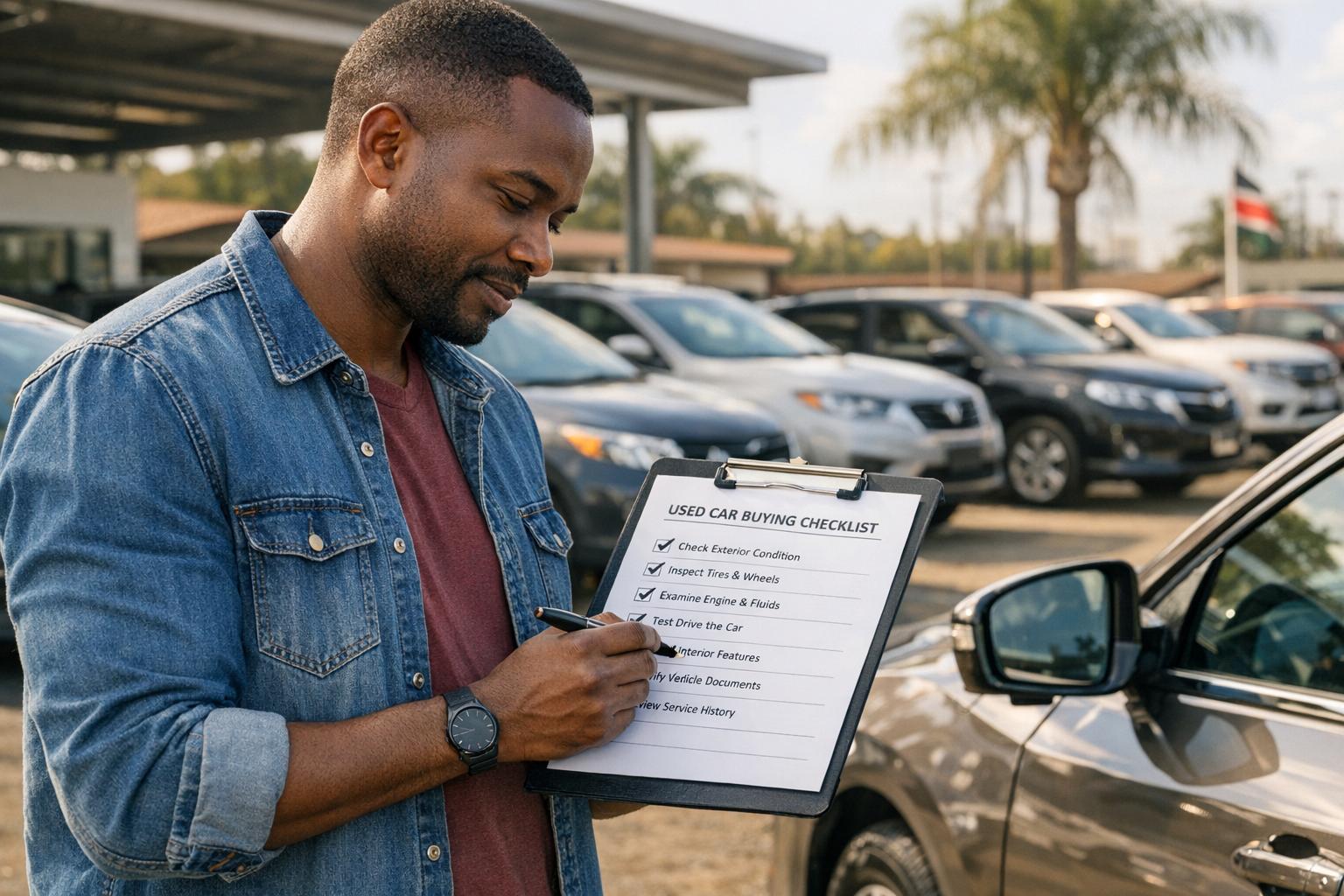
Buying a used car in Kenya can be tricky. Scams, hidden costs, and poorly maintained vehicles are common issues. To avoid these, follow these steps:
- Set a realistic budget: Include NTSA transfer fees (KES 1,660–5,915), third-party insurance (KES 5,000–15,000 annually), and 10% of the car’s price for unexpected repairs.
- Research reliable models: Focus on fuel-efficient and durable cars like the Mazda Demio, Toyota RAV4, or Toyota Probox.
- Use trusted platforms: Stick to verified sellers on platforms like AUTO24.co.ke and avoid deals that seem too good to be true.
- Verify documents: Check the logbook, NTSA records, and ensure the seller initiates the online transfer process.
- Inspect the car: Examine the exterior, interior, engine, and fluids. Test drive the car to check for mechanical issues.
- Secure payment and transfer: Use traceable methods like bank transfers or bankers’ cheques. Complete the NTSA transfer promptly to avoid legal complications.
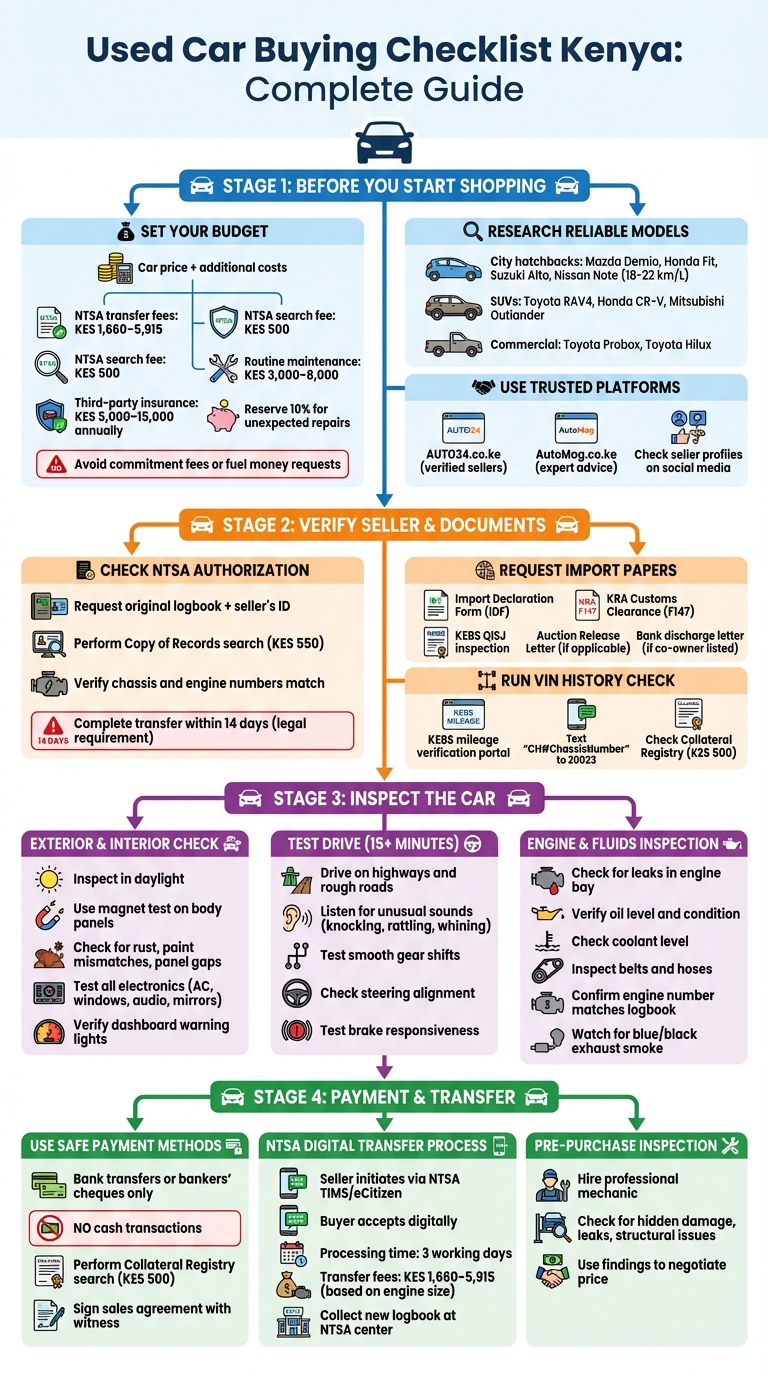
Complete Used Car Buying Checklist Kenya 2026
Before You Start Shopping
Set Your Budget
When planning your car purchase, don’t just focus on the sticker price – factor in additional expenses. These include NTSA transfer fees (ranging from Sh1,660 to Sh5,915 depending on engine size), a Sh500 NTSA search fee, third-party insurance (Sh5,000–Sh15,000 annually), and routine maintenance costs (Sh3,000–Sh8,000). It’s also wise to set aside 10% of your budget for unexpected repairs. If you’re eyeing a car that’s over eight years old, anticipate higher maintenance costs due to wear and tear. Be cautious of sellers asking for commitment fees or fuel money – these are often signs of scams.
Research Car Models
Focus on models known for reliability and fuel efficiency. For city driving, hatchbacks like the Mazda Demio, Honda Fit, Suzuki Alto, or Nissan Note are excellent choices, offering fuel economy of 18 to 22 km per liter (approximately 42 to 52 mpg). If you need more room, consider SUVs such as the Toyota RAV4, Honda CR-V, or Mitsubishi Outlander. For commercial or utility needs, the Toyota Probox or Toyota Hilux are popular for their durability and strong resale value. Stick to brands like Toyota, Honda, and Nissan, which have a reputation for reliability and easy access to spare parts.
Use Trusted Platforms
The Kenyan used car market can be tricky, with scams being a common concern. To reduce risks, rely on trusted platforms like AUTO24.co.ke, which connects buyers with verified sellers and genuine listings. If you’re exploring social media groups, scrutinize the seller’s profile – accounts created recently may be a red flag. For expert advice, market trends, and tips tailored to Kenyan roads, AutoMag.co.ke is a great resource to guide you through the buying process. Once your budget is set and you’ve identified your preferred models, move on to verifying seller and ownership details in the next steps.
Don’t Get Scammed! The RIGHT Way to Buy & Transfer Ownership of a Car in Kenya
Verify Seller and Ownership Documents
Once you’ve set your budget and chosen your desired car model, the next step is to verify the seller and ownership documents. This is crucial to avoid scams involving stolen vehicles or hidden financial obligations.
Check NTSA Authorization and Logbook

Start by requesting the original logbook and the seller’s ID. Confirm that the names on both documents match. Then, log into the eCitizen portal and use the NTSA service to perform a Copy of Records search. This search costs Ksh 550 and provides the registered owner’s details, including the chassis and engine numbers, make, model, and any legal caveats.
"The seller initiates the transfer online, the buyer accepts digitally; no physical forms or multiple visits to NTSA office are required." – NTSA
If the seller cannot access NTSA TIMS or eCitizen for the transfer, consider it a red flag. Additionally, confirm that the vehicle’s chassis and engine numbers match those listed in the logbook. Any mismatch or evidence of tampering is a serious issue. Keep in mind that driving a vehicle under the previous owner’s name for more than 14 days after purchase is against the law.
Request Import and Inspection Papers
For recently imported vehicles, ask for the following key documents:
These papers confirm the vehicle’s legal entry into Kenya and provide peace of mind for your purchase. If the car was bought at an auction, verify the Auction Release Letter and Certificate of Sale. For inherited vehicles, request the Death Certificate along with the Grant of Letters of Administration or Probate.
If the logbook lists a bank or microfinance institution as a co-owner, do not proceed until the seller provides a discharge letter confirming the loan has been fully repaid.
Run a VIN History Check
Use the Vehicle Identification Number (VIN) or chassis number to perform additional checks. You can verify odometer readings through the KEBS mileage verification portal or by texting "CH#ChassisNumber" to 20023. Ensure that the VIN on the car’s firewall or frame matches the details in the logbook and NTSA search results. If there are discrepancies, the Directorate of Criminal Investigations (DCI) can conduct a tape-lifting process to verify the vehicle’s original identity.
Additionally, check the Collateral Registry on the eCitizen portal (MPSR) to ensure the car hasn’t been used as loan security. Never make any payment until all these checks are complete. Proper verification protects you from legal troubles and financial losses.
Once the seller and ownership documents are confirmed, you can move on to inspecting the car’s condition.
sbb-itb-e5ed0ed
Inspect the Car’s Condition
Once you’ve verified the seller and checked the ownership documents, the next step is to carefully assess the car’s physical and mechanical state. This step ensures the car’s condition matches the details in the paperwork.
Check Exterior and Interior
Start your inspection during daylight hours – natural light makes it easier to spot issues like paint inconsistencies or body damage that artificial lighting might hide. Walk around the car and look for mismatched paint, scratches, dents, or panels that don’t line up properly. Pay attention to gaps around the doors and hood; uneven spacing could indicate structural damage.
A handy trick is to use a magnet on the body panels. If it doesn’t stick, that area may have been repaired with body filler, possibly to cover damage. Check for rust around the wheel arches, door frames, and under the car. Look underneath for fresh welds or extensive rust, which might suggest major past repairs. Examine the tires for uneven wear, bald spots, or cracks in the sidewalls – these could signal alignment or suspension issues.
Inside, inspect the seats, steering wheel, and floor mats for wear and tear. If these show significant damage but the odometer shows low mileage, it could be a red flag for odometer tampering. Test all electronics, including the air conditioning, power windows, audio system, and mirrors. When you start the engine, ensure all dashboard warning lights turn on briefly and then go off.
Test Drive the Car
Take the car for a test drive, ideally for at least 15 minutes. Start the engine while it’s cold, as some problems only appear as the engine warms up. Drive on a mix of smooth highways and rough roads to evaluate how the suspension and alignment handle different conditions.
Listen closely during the drive. The engine should idle smoothly and accelerate steadily. Be on the lookout for unusual sounds like knocking, rattling, whining, or hissing. If the car has a manual transmission, gear shifts should be smooth and free of grinding. For automatics, the gears should change seamlessly without delays or jerking. Notice if the car pulls to one side or if the steering wheel vibrates – both could point to alignment or suspension issues. Test the brakes for responsiveness, and listen for squealing or grinding noises. Drive over bumps to check for any bouncing, squeaking, or clunking from the suspension.
"I’ve bought about three cars and the experiences are crazy. The last one seemed like a good car from the outside but it turned out to have a damaged engine from a previous accident. It was almost a write-off…" – Maurice Otieno, Executive Director, Baraza Media Lab
After the test drive, it’s time to inspect the engine and fluids for any hidden problems.
Inspect Engine and Fluids
Pop the hood and carefully examine the engine bay, radiator, and transmission for any signs of leaks or wet spots. Pull out the oil dipstick to check the oil level and condition. If the oil is dark, gritty, or very low, it could indicate poor maintenance. Also, check the coolant level – it should be sufficient to prevent overheating. Inspect the belts and hoses for cracks, wear, or signs of aging.
Double-check that the engine number matches the one listed in the logbook to avoid potential legal or fraud issues. While test driving, keep an eye on the exhaust. Blue smoke could mean the engine is burning oil, while black smoke might signal fuel system problems. Finally, watch the dashboard for any warning lights that could point to sensor or mechanical issues.
Payment and Ownership Transfer
Once you’ve confirmed the car’s condition, it’s time to finalize the deal. Use bank transfers or bankers’ cheques for added security and traceability.
"Avoid transacting in cash when meeting the owner/seller. Always use Bankers’ Cheques! They are as good as cash but have the safety precaution of being traceable." – OT Advocates
Prepare a detailed sales agreement that includes the vehicle’s specifics, the agreed price, and the involved parties. Sign it in the presence of a witness, preferably in a secure, public location. Be cautious of any requests for "commitment fees", "viewing fees", or "fuel fees" before you’ve seen the car and verified the documents – these are often scams. Once the agreement is in place, follow these steps to secure payment and ownership transfer.
Use Safe Payment Methods
Only make payment after the seller initiates the digital transfer process through NTSA TIMS or eCitizen. This ensures they can’t vanish with your money before starting the required paperwork. Before transferring funds, perform a Collateral Registry search on the eCitizen portal (costing about KES 500) to ensure the car isn’t tied up as collateral for a loan. If the logbook lists a bank, microfinance institution, or deceased person as a co-owner, wait until you receive a valid discharge letter and confirm the charge has been removed from NTSA records.
Transfer the Logbook Through NTSA
Kenya’s vehicle ownership transfer is now fully digital, managed through the NTSA service portal on eCitizen. The seller will upload a PDF of the original logbook and input your ID number and PIN to begin the transfer. You’ll then be notified via your eCitizen account to accept or decline the transfer. Once you accept and provide the necessary details, the process typically takes about three working days to complete.
"The seller initiates the transfer online, the buyer accepts digitally; no physical forms or multiple visits to NTSA office are required." – National Transport and Safety Authority (NTSA)
Transfer fees vary based on engine capacity, ranging from KES 1,660 for engines up to 1,000cc to KES 5,915 for engines over 3,000cc. Under Kenya’s Traffic Act, driving the car under the previous owner’s name for more than 14 days after purchase is a legal offense, so ensure you complete this step promptly. Once the digital transfer is approved, collect the new logbook at an NTSA center after surrendering the old one and presenting your ID. After the transfer is confirmed, finalize the purchase with a pre-purchase inspection.
Hire a Pre-Purchase Inspector
Bring in a professional mechanic to uncover potential hidden issues, such as engine problems, transmission delays, hydraulic leaks, or structural damage from past accidents. They’ll look for signs like fresh welds, heavy rust, or body filler that might conceal collision damage, as well as evaluate the condition of fluids to determine if the car has been properly maintained.
This inspection can provide you with solid evidence to negotiate a lower price if repairs are needed, and it helps you avoid surprises after the purchase. Choose a mechanic experienced in the specific make and model you’re buying, and document all findings before closing the deal.
Conclusion: Safe Used Car Buying in Kenya
Purchasing a used car in Kenya can be a secure process if you take the right precautions. Start by verifying all documents through the NTSA TIMS platform and have a trusted mechanic thoroughly inspect the car for hidden issues, including the engine, suspension, and undercarriage. Be cautious of deals that seem unusually cheap, as they could signal potential problems.
Once you’re satisfied with the car, complete the ownership transfer immediately through the NTSA portal. Keep in mind that NTSA transfer fees range from KES 1,660 to KES 5,915, depending on the engine size. It’s also wise to set aside about 10% of the purchase price for any unexpected repairs. Use secure payment methods like bankers’ cheques instead of cash, and never pay commitment fees before inspecting the vehicle and confirming its documentation.
FAQs
What warning signs should I watch out for when buying a used car in Kenya?
When buying a used car in Kenya, it’s essential to stay vigilant for signs of scams or hidden issues. One major red flag is unusually low prices compared to the market average – these often signal a trap. If a seller refuses to allow a mechanic to inspect the car, they could be trying to hide serious problems. Always cross-check the Vehicle Identification Number (VIN) on the logbook, registration documents, and the car itself to confirm they match.
Be on the lookout for forged documents, such as logbooks or import papers. Clues like missing watermarks, mismatched serial numbers, or poor-quality printing can indicate fraud. Also, pay attention to the car’s history. Frequent logbook transfers or a pattern of accidents should make you think twice. Mileage tampering is another common trick – signs of wear and tear that don’t match the odometer reading, or service records showing higher mileage, are clear warning signs.
Lastly, steer clear of sellers who rely on stock photos, push for quick deposits, or avoid meeting in person. These tactics are often used in scams. Take your time to verify every detail thoroughly before making any payments.
How can I confirm that a car’s documents are legitimate when buying in Kenya?
To confirm a car’s documents are genuine, start by examining the original logbook, import clearance papers, and the insurance certificate. Look for official security features like watermarks or holograms, and ensure the seller’s name on the logbook matches their ID. If the car is an import, request the KRA tax clearance slip to confirm customs duties have been settled.
Then, use the NTSA TIMS portal to verify the car’s details electronically. Input the registration number to check the registered owner, chassis (VIN) number, and engine number. Compare these with the physical details on the logbook and the vehicle itself – inspect the chassis and engine block directly. Additionally, check for any unpaid fines or theft records. For imported cars, confirm the import clearance number to ensure there are no unpaid duties or hidden claims. If all the details align, you can trust the paperwork is legitimate.
What should I look for during a test drive when buying a used car?
When taking a car for a test drive, focus on how it feels and performs in real-world conditions. Start with the handling and steering – the car should respond effortlessly and remain steady when navigating corners or varying road surfaces. Test the acceleration by pressing the gas pedal at different speeds; the engine should operate smoothly, free of hesitation or odd noises. Pay attention to the brakes as well – ensure the car stops evenly, without pulling to one side or producing unusual sounds.
Don’t overlook ride comfort either. Take note of any excessive vibrations, rattling noises, or seats that feel uncomfortable. While driving, listen carefully for any strange engine sounds and check for visible exhaust smoke or leaks, as these could signal mechanical issues. These checks can give you a clearer picture of the car’s condition and help you steer clear of unexpected repair costs down the road.
Related Blog Posts
- Avoid scams when buying a car in Kenya
- What to Look Out for When Buying a Second-Hand Car in Kenya
- Step-by-Step Guide to Buying a Car in Kenya (2025 Edition)
- 7 Mistakes to Avoid When Buying a Used Car in Kenya