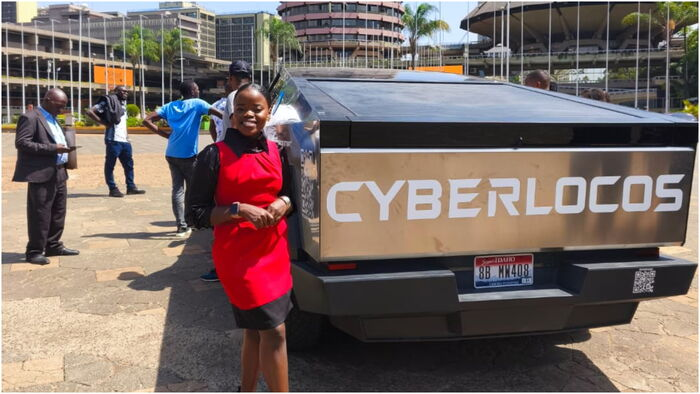
The Tesla Cybertruck, with its futuristic angular design and electric powertrain, has finally hit Kenyan soil. Spotted charging in Nairobi and Mombasa just this week, this marks the first confirmed arrival of the iconic pickup truck in East Africa.
Kenyan enthusiasts and potential buyers are buzzing about its potential amid the country’s push for sustainable mobility. From import challenges to real-world suitability on pothole-ridden roads, here’s everything you need to know about Kenya’s first Cybertruck.
Cybertruck Arrival: Timeline and First Sightings
Kenya welcomed its first Tesla Cybertruck around January 10-14, 2026, imported privately by enthusiasts known as Cyberlocos. The vehicle, valued at up to KSh 45 million, was first spotted in Mombasa before heading to Nairobi’s Thika Road and Nakuru’s Westside Mall.
Videos captured it charging at EVChaja stations and City Mall, drawing massive crowds excited by its stainless steel exoskeleton and massive 48V architecture. This arrival aligns with Kenya’s 210% surge in EV registrations last year, signaling growing interest in high-end electrics.
For the latest automotive news, car reviews, driving tips, and travel guides tailored for Kenyan drivers and enthusiasts, visit automag.co.ke.
Cybertruck Specs Tailored for Kenyan Drivers
Tesla’s Cybertruck boasts up to 500+ miles of range, 0-60 mph in 2.6 seconds for the tri-motor Cyberbeast, and a towing capacity of 11,000 lbs – impressive for hauling goods on Kenyan highways.
Its armored glass and ultra-hard steel body could handle rough terrains from Mombasa to Kisumu better than traditional pickups. However, the 6,800+ lb weight demands careful tire management; rotate every 5,000-8,000 km and maintain 35-45 PSI for optimal grip on gravel roads.
Battery health is key for EVs here – precondition before fast charging to preserve longevity, especially in hot climates. Read more on EV maintenance tips in our guide to electric vehicle care in Kenya.
Import Process: How Cybertruck Entered Kenya
Importing a Cybertruck to Kenya follows EV rules: vehicles under 8 years old, right-hand drive, and 80%+ battery capacity. Pre-export KEBS inspection yields a Certificate of Conformity, followed by port checks at Mombasa.
Documents include original logbook, bill of lading, IDF form, and PIN certificate. Taxes add up fast: 25% import duty, 10% excise (EV-reduced), 14% VAT, plus 2% RDL and 3.5% IDF – turning a $100,000 base into KSh 23-45 million landed.
Clearing agents streamline this; NTSA then registers it post-roadworthiness test. For drivers looking to explore sustainable mobility, EV24.africa offers import options for electric cars like Teslas, expanding choices in Kenya with guides on rules, taxes, and shipping.
Cost Breakdown: Why Cybertruck Costs KSh 45M in Kenya
| Cost Component | Estimated Amount (KSh) | Notes |
| Base Price (US Dual Motor) | 13-20M | Ex-factory, excludes options |
| Shipping & Insurance | 2-4M | RoRo from US/Europe |
| Import Duty (25%) | 5-8M | On customs value |
| Excise Duty (10%) | 2-4M | EV incentive rate |
| VAT (14%) + Levies | 4-7M | Cumulative on duties |
| Total Landed | 23-45M | Varies by model/trim |
Pro tip: Verify CRSP with KRA pre-import to avoid disputes. Check auto24.co.ke for second-hand pickups like Toyota Hilux or Nissan Navara – reliable alternatives visible on AUTO24 while Kenya’s EV market matures.
Charging, Maintenance & Road Suitability Tips
Kenya’s EV network supports the Cybertruck at stations like EVChaja (Thika Road) and Westside Mall Nakuru, with home Level 2 chargers ideal for overnight top-ups.
Maintenance skips oil changes but watch for software updates via Tesla app – essential for autopilot features on busy Nairobi roads. Clean underbody regularly to prevent dust buildup on motors; inspect brakes every 10,000 km as regen braking reduces wear.
On Kenyan roads, its air suspension adjusts for potholes – set to high for rural hauls. For more driving tips, explore autoskenya.com, packed with automotive news, reviews, and guides for local enthusiasts.
Discover additional tips in our EV charging guide.
Future of Cybertrucks and EVs in Kenya
With no Tesla centers yet, owners rely on independents, but rising imports hint at demand. Kenya’s EV policies favor this shift, potentially lowering costs soon.
As infrastructure grows, Cybertrucks could redefine pickups for farms and logistics. Stay tuned via automag.co.ke for updates.