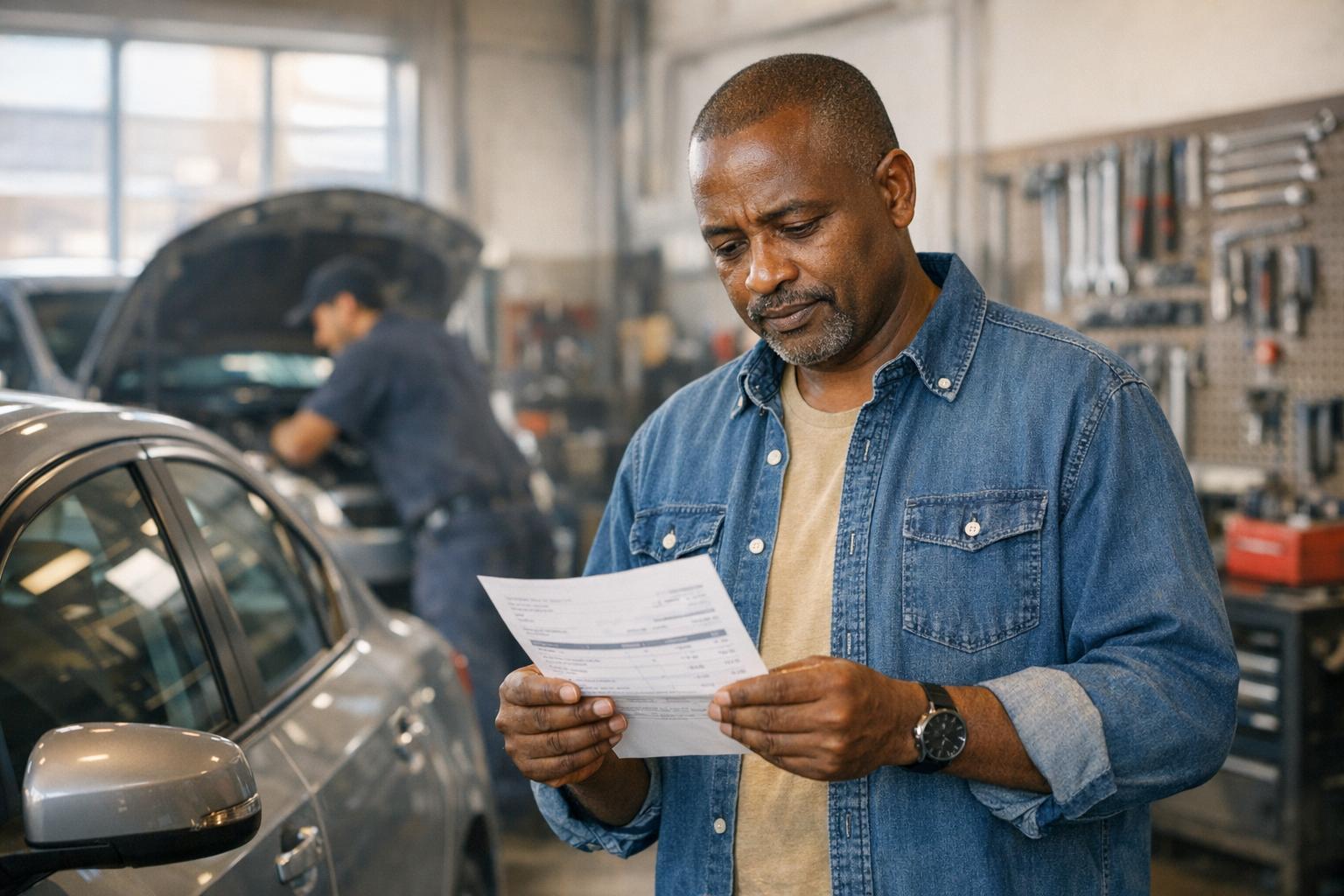
Car ownership in Kenya is getting more expensive in 2026, with annual maintenance costs averaging KSh 200,000 for vehicles with engine sizes between 1,500cc and 2,000cc. Rising spare part prices, inflation (6.9%), and higher labor costs are driving up expenses. Here’s a quick breakdown:
- Minor services: KSh 12,000–15,000 per visit (every 5,000–7,500 km).
- Major services: KSh 30,000–35,000 (every 20,000 km).
- Unexpected repairs: KSh 20,000–40,000 annually.
- Brake repairs: KSh 20,000–40,000 per axle.
- Tire replacements: KSh 25,000–50,000 for a full set.
Spare parts are pricier due to taxes and import duties, though a new trade deal with China could reduce costs for Chinese parts. Theft of parts like side mirrors adds extra "security costs" (KSh 1,000–2,000 for riveting). Skilled labor is also in higher demand, especially for electric and hybrid cars, further increasing service prices.
To save money:
- Stick to regular maintenance schedules.
- Use quality spare parts from trusted suppliers.
- Budget for both routine and unexpected repairs.
Planning ahead is key to managing these rising costs effectively.
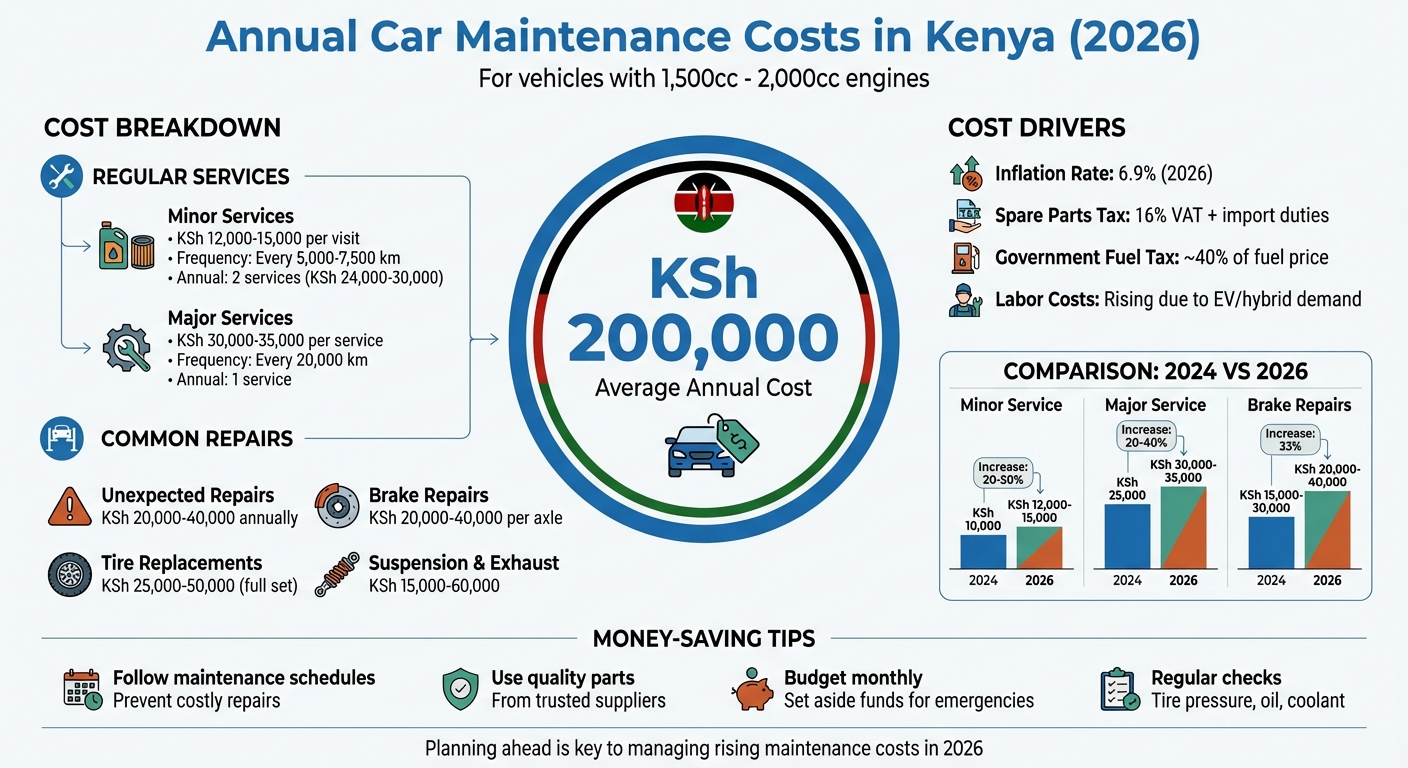
Annual Car Maintenance Costs Breakdown Kenya 2026
Cost of servicing a Peugeot in Kenya
sbb-itb-e5ed0ed
What Drives Car Maintenance Costs in 2026
Car maintenance expenses in Kenya are climbing, driven by several interconnected factors. Understanding these elements can help car owners better prepare for the financial demands of keeping their vehicles in good condition.
Inflation and Economic Conditions
Kenya’s inflation rate hit 6.9% in early 2026, putting additional pressure on household budgets and service costs. This economic strain forces car owners to carefully balance their earnings against rising maintenance expenses to avoid financial hardship. Fuel prices remain a major contributor to overall costs. Although global petroleum prices have dropped, the Energy and Petroleum Regulatory Authority (EPRA) hasn’t fully passed on these savings to motorists. Business writer Macharia Kamau explains:
"The Energy and Petroleum Regulatory Authority (Epra) has denied users of super petrol a bigger reduction in retail prices, holding back the full benefit of the falling cost of petroleum products."
Government taxes account for roughly 40% of the price per liter of fuel, keeping transport and operational expenses high. For frequent drivers, routine maintenance can now cost as much as KSh 60,000 annually.
Adding to these challenges, the rising cost of spare parts further inflates maintenance bills.
Spare Part Prices and Supply
Spare parts in Kenya face hefty markups due to a 16% VAT, alongside import duties and additional levies, which significantly drive up prices. The type of vehicle you drive has a big impact on your spare parts budget. For example, a standard battery for a Toyota Fielder costs between KSh 7,500 and KSh 20,000, while a luxury Audi A4 battery can cost up to KSh 50,000 – a staggering 566% difference for a similar function.
There’s some hope for relief: a January 2026 trade agreement with China allows 98.2% of goods to enter duty-free, which could eventually lower costs for Chinese-sourced parts. However, theft of parts like side mirror covers and indicator lights adds to the financial strain. Replacing these items can cost at least KSh 2,500 for second-hand parts in downtown Nairobi. To prevent such thefts, many motorists now spend KSh 1,000 to KSh 2,000 on riveting, creating a new "security cost" in their maintenance budgets.
As spare parts become more expensive, the expertise required for their installation is also becoming pricier.
Labor Costs and Technician Shortages
The growing popularity of electric and hybrid vehicles is driving demand for technicians skilled in high-voltage systems and advanced diagnostics. Dr. Isaac Nzyoka, Group Chief Operations Officer at Old Mutual East Africa, highlights the importance of skilled labor:
"As growth picks up, firms that prioritize talent development will be best positioned to capture new opportunities."
The professional service sector is expanding at a 5.12% compound annual growth rate, as more customers seek warranties, structured financing, and documented expertise. While these standards benefit consumers, they also increase labor costs. Furthermore, approximately 79% of Kenyan firms plan to boost their security and operational budgets in 2026, adding to the overhead costs of maintenance facilities.
These combined factors – rising inflation, higher spare part prices, and increasing labor costs – paint a challenging picture for car owners managing their maintenance expenses in 2026.
Expected Costs for Regular Car Services
With inflation and rising part costs, routine car servicing has become noticeably pricier. If you’re planning for car maintenance in Kenya in 2026, it’s essential to budget carefully to avoid unexpected financial strain.
Oil Changes and Minor Services
A minor service typically includes an oil change, oil filter replacement, air filter replacement, and a basic inspection. By 2026, the cost for a minor service ranges between KES 12,000 and KES 15,000, up from KES 10,000 in 2024. For vehicles with engine capacities between 1,500cc and 2,000cc, oil changes are recommended every 5,000 to 7,500 km. According to Eddy Mwanza, Creative Consultant at Money254, basic oil changes at standard repair shops cost around KES 5,000, covering both labor and parts.
For most standard vehicles, you’ll need to plan for two minor services each year. While these services handle routine maintenance, major services are vital for the long-term health of your car.
Major Services and Annual Maintenance
Major services go beyond routine checks, involving a full inspection, spark plug replacements, brake fluid changes, and battery checks. These are typically required every 20,000 km. In 2026, you should budget between KES 30,000 and KES 35,000 for a major service, up from KES 25,000 in 2024. Samuel Amira, Marketing Manager at Autochek, explains:
"A basic car with 1500cc to 2000cc will need about 2 minor services per year estimated at 10,000 each and one major service estimated at 25,000 per year".
With rising prices, the total annual cost for scheduled maintenance now falls between KES 54,000 and KES 65,000. Additionally, you should set aside KES 20,000 to KES 40,000 annually for unexpected repairs. When factoring in maintenance, insurance, and security features, owning a standard vehicle in Kenya could cost around KES 200,000 per year.
Cost Comparison: Minor vs. Major Services
Minor services focus on basic tasks like lubrication and filtration, performed every 5,000 to 7,500 km. Major services, on the other hand, are more comprehensive, involving tasks such as spark plug replacements, brake fluid changes, battery checks, and a full system inspection – typically required every 20,000 km. Because of the technical expertise needed, major services come with higher labor costs.
| Service Type | Key Components | Frequency | 2026 Cost Range |
|---|---|---|---|
| Minor Service | Oil change, oil filter, air filter, basic inspection | Every 5,000–7,500 km | KES 12,000–15,000 |
| Major Service | Full system inspection, spark plug replacement, brake fluid change, battery check | Every 20,000 km | KES 30,000–35,000 |
The cost differences between minor and major services highlight the varying levels of complexity and labor involved. Additionally, the type of vehicle you own plays a significant role in determining expenses. For instance, economy cars like the Toyota Corolla benefit from affordable and widely available parts. On the flip side, luxury brands such as Mercedes-Benz or BMW often require premium fluids and specialized technicians, which significantly raises both parts and labor costs.
Common Repair Costs in 2026
Unexpected car repairs can take a big bite out of your budget. Understanding these costs can help you plan better and avoid unpleasant surprises.
Brake Repairs and Parts
In 2026, brake repairs are expected to cost between KES 20,000 and KES 40,000 per axle, depending on your vehicle and the quality of parts used. If you hear a high-pitched squealing sound, it’s likely your brake pads are worn and need immediate attention. Ignoring this can compromise your safety, so don’t delay repairs.
Tire Replacements and Alignment
Replacing a full set of tires in 2026 will likely cost KES 25,000 to KES 50,000, with prices influenced by tire brand, size, and whether you opt for imported or locally available options. Regular tire alignment is essential to prevent uneven wear and improve fuel efficiency. Experts recommend rotating and aligning your tires every 10,000 kilometers to prolong their lifespan. This small step can save you money in the long run.
Suspension and Exhaust Repairs
Suspension and exhaust system repairs can range from KES 15,000 to KES 60,000. Suspension parts like ball joints, tie-rod ends, and shock absorbers wear out over time and should be inspected or replaced during major services every 10,000 kilometers. Exhaust system repairs vary depending on whether you need a minor patch or a full replacement, with costs influenced by the quality of parts and the expertise of the mechanic.
Cost Comparison: 2026 vs. 2024
Repair costs have increased noticeably between 2024 and 2026 due to inflation, supply chain challenges, and higher import duties on automotive parts. The gap between imported genuine parts and locally sourced alternatives has grown, with repair quotes now varying by 20–40%. Here’s a breakdown of the changes:
| Repair Category | 2024 Cost (KES) | 2026 Cost (KES) | Primary Cost Drivers |
|---|---|---|---|
| Brake Repairs (per axle) | 15,000–30,000 | 20,000–40,000 | Part quality, labor shortages |
| Tire Replacement (Full Set) | 20,000–40,000 | 25,000–50,000 | Import costs, alignment requirements |
| Suspension & Exhaust | 12,000–45,000 | 15,000–60,000 | Complexity of repair, part sourcing |
When planning your repair budget, it’s wise to anticipate these fluctuations. Sourcing parts from trusted suppliers is crucial. While locally made parts might seem cheaper upfront, imported genuine parts often last longer, potentially saving you money over time.
These insights set the stage for exploring cost-saving strategies in the next section.
How to Reduce Car Maintenance Expenses
Keeping your car in good shape doesn’t have to break the bank. The trick lies in shifting your approach from reacting to problems to preventing them. As Samuel Amira, Marketing Manager at Autochek, explains:
"By proactively budgeting for routine maintenance and setting aside funds for emergencies, one can safeguard against unexpected financial burdens and enjoy peace of mind on the road."
Not only does this approach save money in the short term, but it also helps your car last longer.
Following Regular Maintenance Schedules
Think of regular maintenance as an investment in your car’s future. Spending a little now on upkeep can save you from costly repairs down the road. Set aside a monthly budget tailored to your car’s age and mileage. For instance, if you drive a 1,500cc to 2,000cc car, plan for two minor services annually at KES 10,000 each and one major service at KES 25,000.
Take a few minutes each month to check key areas like tire pressure, tread depth, oil levels, coolant, and washer fluid. Stick to a maintenance routine: change your oil every 5,000 to 7,500 kilometers and rotate your tires every 10,000 kilometers. These small steps improve fuel efficiency and extend the life of your car’s components. Pay attention to warning signs like dashboard alerts, unusual smells, or squealing brakes – addressing small issues early can prevent bigger, more expensive problems.
Buying Quality Parts from Trusted Sources
When it comes to replacement parts, don’t skimp on quality. Investing in manufacturer-recommended parts ensures your car runs smoothly and avoids premature breakdowns. While cheaper parts might save you money upfront, they often cost more in the long run. To get genuine parts at reasonable prices, work with verified service providers or trusted networks. You can also use technology or financing partnerships to track and manage your maintenance expenses more effectively.
Planning Your Vehicle Lifecycle
If you want to keep costs down over the years, start by choosing a car with low maintenance needs. Look for models that have affordable, easy-to-find spare parts and hold their value well over time. Regular care not only keeps your car running but also boosts its resale value. A clean, well-maintained car is much more appealing to buyers, making it a smart way to preserve your investment.
Don’t overlook security measures, either. Protecting your car from theft can save you a lot of money and stress. Consider costs like car alarms (starting at KES 6,000), trackers (from KES 5,000), and secure parking when calculating the total cost of ownership. These small investments can go a long way in safeguarding both your car and your wallet.
Preparing for 2026 Car Maintenance Costs
Owning a car in Kenya comes with its fair share of financial obligations, and as 2026 approaches, planning ahead will be more important than ever. On average, maintaining a vehicle costs around KSh 200,000 per year – a figure that emphasizes the need for careful budgeting.
The smartest way to handle these costs is to shift from reacting to expenses as they arise to planning for them in advance. Consider setting up a monthly maintenance fund tailored to your car’s age and mileage. This simple habit can help you stay prepared for unexpected repairs, while also cushioning your budget against inflation and fluctuating market prices. Being proactive in this way not only reduces financial stress but also ensures you’re ready for any surprises.
Staying informed about market trends is equally critical. Keep an eye on the availability of spare parts and fuel price changes, as these factors play a big role in your overall car expenses. Additionally, explore financing options that combine insurance and maintenance services. These bundled plans can simplify your cash flow while ensuring your car gets the care it needs. Tools like mobile apps can also be a great way to track your spending and identify patterns in your car-related expenses.
Proper maintenance is about more than avoiding breakdowns – it’s about protecting your investment. A car that’s well cared for not only avoids major repair bills but also retains a higher resale value. Regular, timely maintenance can save you from expensive fixes down the line.
Take a moment to evaluate your current maintenance habits and adjust your budget to align with the realities of 2026. In Kenya’s ever-changing automotive environment, those who plan ahead will find themselves better prepared to navigate the road ahead.
FAQs
How can I save money on car maintenance in Kenya?
Lowering car maintenance costs in Kenya requires a mix of regular care, smart decisions, and budget-friendly strategies. Start by following your car manufacturer’s recommended service schedule. Routine services, which cost about KES 10,000, and a major annual service, typically around KES 25,000, can save you from much pricier breakdowns in the long run. Tackling minor issues early – like fixing oil leaks or replacing worn brake pads – can also prevent hefty repair bills down the line.
When it comes to parts, shop around to compare prices at different workshops and explore reliable aftermarket options. Choosing trusted, affordable service centers instead of high-end dealerships can save you KES 5,000–10,000 per visit without sacrificing quality. Additionally, you can handle simple DIY tasks, such as topping off fluids or replacing windshield wipers, to cut costs. Scheduling services during off-peak times may also help you take advantage of lower labor rates. On average, plan to spend KES 20,000–60,000 annually on maintenance, and keep track of your expenses to manage your car upkeep effectively.
Why are car maintenance costs expected to rise in Kenya by 2026?
Car maintenance in Kenya has become noticeably more expensive in 2026, and several factors are driving this trend. One major reason is the increase in import duties on vehicles and spare parts, which came into effect in mid-2023. These duties, combined with taxes like VAT and excise charges, have pushed up the cost of parts for both workshops and car owners. Adding to the challenge, global supply-chain disruptions and a weakening Kenyan shilling have further inflated the prices of imported components. On top of that, labor costs are climbing as mechanics adjust their rates to keep pace with inflation.
Fuel prices have also played a significant role in rising maintenance costs. The price of gasoline jumped from about KSh 137 per liter in 2023 to over KSh 200 per liter by early 2025. As a result, many car owners are driving less and prioritizing regular oil changes and engine tune-ups to get the most out of their fuel. Routine service visits now cost between KSh 10,000 and KSh 25,000, adding to the financial strain. And with higher insurance premiums and registration fees, keeping a car on the road in 2026 has become a much pricier endeavor for Kenyan drivers.
Will a new trade deal with China lower car maintenance costs in Kenya?
Currently, there’s no verified information about a new trade agreement between Kenya and China that would specifically influence car maintenance costs in 2026. Most discussions about Kenya’s automotive market center around shifts in import duties under the East African Community framework and broader economic trends. However, none of these reports point to direct cost-saving benefits linked to a potential China-Kenya trade deal.
With no concrete details available, it’s hard to predict if such an agreement would lower car upkeep expenses. For now, keeping an eye on trade policy updates and their possible impact on the automotive industry is the most practical approach.
Related Blog Posts
- Ultimate Guide to Car Maintenance Budgeting in Kenya
- Car prices in Nairobi 2025
- The True Cost of Owning a Car in Kenya: Fuel, Maintenance & More
- Why Car Prices in Kenya Are Changing in 2025